 Musei nazionali di Perugia – Direzione regionale Musei nazionali Umbria
 PETRU E TRILE
Petru e Trile
Sepolture femminili e politiche matrimoniali
La tomba (II sec. a.C.), scoperta presso la Villa del Palazzone, ha restituito, come nel caso degli ipogei degli Acsi e dei Vipi Vercna, laminette di piombo con i nomi dei defunti, oggi perdute.
Era una tomba prevalentemente femminile, con 5 donne, 4 della famiglia Petru e un uomo e una donna della gens Trile.
Rimangono 3 urne esposte sui gradoni dell’Ipogeo mentre Larthi Petrui Luesnaś è nota solo da un cippo, impiegato in genere come segnacolo tombale ma in questo caso collocato forse nella tomba, magari per onorare una donna della famiglia di particolare prestigio.
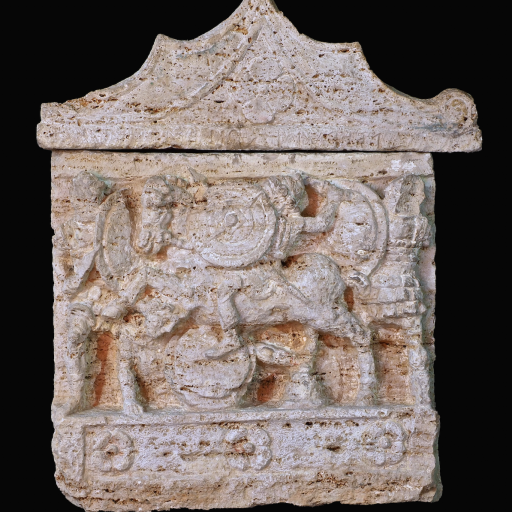
Apparteneva alla gens Petru, Petrui Trileś (67), di cui non conosciamo il prenome (nome personale), sposata a un membro dei Trile. La donna rappresenta il trait d’union tra le due famiglie documentate nell’ipogeo in via prevalente. La sua urna è decorata con un fiore tra due pelte sul coperchio e una scena di combattimento tra un cavaliere e tre guerrieri sulla cassa. Il marito non fu sepolto nella tomba, mentre vi trovò posto il figlio Larth Trile Larisal Petrual clan (urna dispersa), probabilmente morto in giovane età, prima del matrimonio.
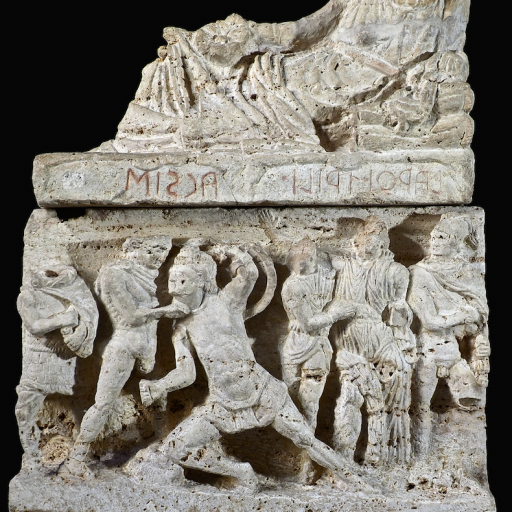
Alla stessa generazione apparteneva verosimilmente Larthi Trili Acsiś (73), il cui coperchio è presentato nell’allestimento sopra una cassa non pertinente e non diversamente attribuibile, esposta sui gradoni per il mito raffigurato, il duello tra Eteocle e Polinice, affiancati probabilmente dalla sorella Antigone e dal padre Edipo.
Come noto, i due fratelli, figli di Edipo, si affrontarono in un duello mortale per la successione al trono di Tebe, uccidendosi a vicenda. I temi del fratricidio, della rovina della stirpe e della ineluttabilità del destino devono aver reso questo mito particolarmente significativo per rimarcare la sacralità ed inviolabilità dei legami di sangue e la metafora di una morte che non lascia né vinti né vincitori.
I due figli sposati di Larthi Trili Acsiś (73) furono invece sepolti nella Tomba degli Acsi, quella del marito (famiglia degli Acsi, 12 e una dispersa)
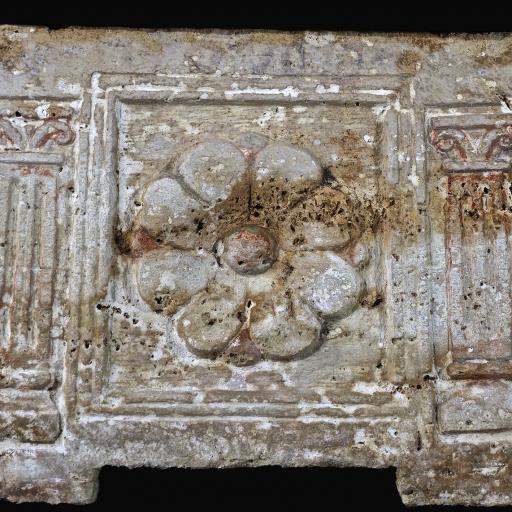
Completavano il nucleo gentilizio Thana Petrui Ateiś e Petru(i) Thurṃ(naś) (57) forse sorelle di Petrui Trileś. L’urna di Petru(i) Thurṃ(naś) (57), ritenuta a lungo dispersa, è stata identificata durante il restauro 2026 grazie alla ricomparsa di parte dell’iscrizione, dipinta in nero, che ha confermato l’appartenenza alla gens.
La tomba documenta una usanza, nota nel territorio di Perugia da un certo numero di casi, di sepolture destinate a soli uomini o sole donne, con la possibile eccezione rappresentata da figli o figlie morti prima del matrimonio, come attestato anche per la giovane Veilia Velimnei, unica figura femminile all’interno del monumentale sepolcro dei Velimna.
La scelta di riunire insieme donne sposate legate da vincoli di stretta parentela, può sottolineare il ruolo particolare svolto dalle figure femminili nella società etrusca, forse anche in forma congiunta e associata, in grado di rivestire cariche sacerdotali e di potere, di gestire in autonomia figli e beni di proprietà.
La documentazione epigrafica evidenzia che le donne Petrui andarono in sposa, oltre che ai Trile, agli Acsi, Atei, Luesna e Thurmna lasciandoci intuire una fitta rete di alleanze matrimoniali e offrendoci una vivace rappresentazione delle strategie familiari gentilizie della Perugia etrusca.
Immagini:
- Urna 57.
- Urna 67.
- Urna 73.
Petru e Trile
Women’s Burials and Marriage Alliances
This tomb, dating to the second century BC and discovered near the Villa del Palazzone, yielded, like the hypogea of the Acsi and Vipi Vercna families, inscribed lead plates recording the names of the deceased, now lost.
It was a predominantly female burial, containing the remains of five women—four belonging to the Petru family—together with one man and one woman of the Trile gens.
Three urns survive and are displayed on the stepped tiers within the Hypogeum modern building, while Larthi Petrui Luesnaś is known only from a funerary cippus. Although cippi generally served as grave markers, this example may have been placed inside the tomb, perhaps to honour a particularly distinguished woman of the family.
One of the principal figures is Petrui Trileś (67), whose personal name (praenomen) is unknown. A member of the Petru gens, she had married into the Trile family and thus represents the link between the two main families in the tomb. Her urn is decorated with a flower flanked by two peltae on the lid and, on the chest, with a battle scene showing a horseman confronting three warriors. Her husband was not buried in the tomb, whereas their son, Larth Trile Larisal Petrual clan (urn lost), probably died before reaching marriageable age and was interred alongside his mother’s family.
Probably belonging to the same generation was Larthi Trili Acsiś (73), whose lid is displayed in the present arrangement on a non-original chest that cannot be attributed elsewhere. The chest has nevertheless been included in the display because of its relief depicting the duel between Eteocles and Polynices, probably with their sister Antigone and their father Oedipus.
As is well known, the two brothers, sons of Oedipus, fought one another to the death over the succession to the throne of Thebes, killing each other in combat. Themes of fratricide, the destruction of a family line and the inescapability of fate made this myth especially appropriate in a funerary context, where it could evoke the sanctity and inviolability of blood ties, while also serving as a metaphor for a death that leaves neither victor nor vanquished.
The two married sons of Larthi Trili Acsiś (73) were instead buried in the tomb of the Acsi family—that of her husband (urn 12 and another now lost).
The family group was completed by Thana Petrui Ateiś and Petru(i) Thurṃ(naś) (57), perhaps sisters of Petrui Trileś. The urn of Petru(i) Thurṃ(naś) (57), long believed to have been lost, was identified during the 2026 conservation project when part of its black-painted inscription reappeared, confirming its attribution to the gens.
The tomb provides further evidence for a funerary practice attested at several sites in the Perugian territory: burials reserved exclusively for men or exclusively for women, with the possible exception of sons or daughters who died before marriage, as also illustrated by the case of the young Veilia Velimnei, the only female buried within the monumental tomb of the Velimna family.
The decision to bury together married women connected by close kinship may reflect the particular role played by women in Etruscan society. Acting both individually and collectively, they may have held priestly positions and places of authority, while also managing property and raising their children independently.
The inscriptions further show that women of the Petru family married not only into the Trile family, but also into the Acsi, Atei, Luesna and Thurmna families, revealing a dense network of marital alliances and offering valuable insight into the kinship strategies of the leading families of Etruscan Perugia.
Images:
- Urn 57.
- Urn 67.
- Urn 73.
Galleria fotografica (scorri)
25 September 2026
1 urna 57
25 September 2026
2 urna 67
25 September 2026
3 urna 73
Ultimo aggiornamento
29 Settembre 2026, 15:57