 Musei nazionali di Perugia – Direzione regionale Musei nazionali Umbria
 CACNI
Cacni
Grifi, Arimaspi, doppi gentilizi e figli adottivi
I Cacni sono attestati nel territorio perugino in almeno tre tombe, la più antica delle quali, scoperta e saccheggiata illegalmente nel 2003 a Elce (PG) e recuperata nel 2013, conteneva un sarcofago e 22 urne, una soltanto femminile e una dedicata a una coppia di sposi.
Nel 1843 un altro ipogeo della famiglia è venuto in luce a San Pietro, nella necropoli del Frontone. Ad eccezione di una sepoltura maschile, in questo caso si tratta di una tomba a prevalenza femminile.
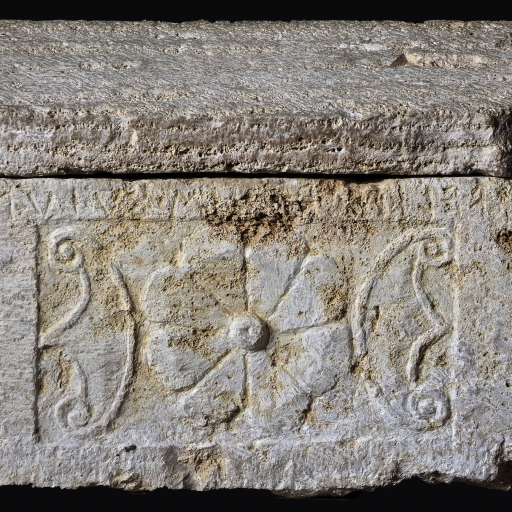
La terza tomba dei Cacni, scoperta nel 1844 nei pressi della Villa del Palazzone, conteneva 3 urne (11, 27, 28), appartenute a due uomini e a una donna (11), forse la moglie di La(rth) Cacni (27).
L’altro uomo della tomba è Aule Anei Cacniś Auleś (28), con Cacni utilizzato come “cognome” della famiglia Anei.
Nonostante il numero esiguo di urne presenti nell’ipogeo, che ci porterebbe a pensare ad uno stretto nucleo familiare, la relazione di Aule Anei Cacni con la possibile coppia coniugale sepolta nella tomba non è facilmente spiegabile. È stato perciò ipotizzato anche un rapporto di adozione tra le famiglie Anei e Cacni, di cui Aule Anei Cacni sarebbe il risultato, sepolto quindi nella tomba di uno stretto parente.
Nel sistema onomastico etrusco, oltre al nome proprio e al nome di famiglia, poteva esistere un terzo elemento, identificabile come “cognome” o secondo gentilizio. Nel nostro caso indica verosimilmente un ramo familiare formatosi a seguito di un rapporto di parentela nato tra le gentes Anei e Cacni conseguenza di passaggi ereditari, alleanze matrimoniali o vere e proprie adozioni, di cui, in assenza di conoscenze specifiche, possiamo solo ipotizzare l’esistenza.
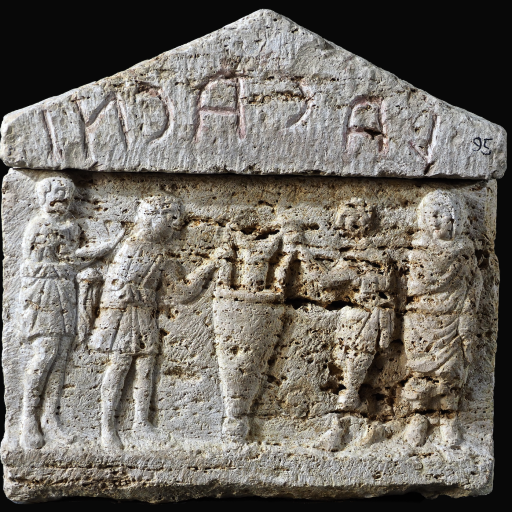
Sull’urna 27 è il motivo dell’anfora infissa nel terreno, intorno alla quale si dispongono quattro personaggi (si veda per il tema anche la famiglia dei Vipi Vercna, 48).
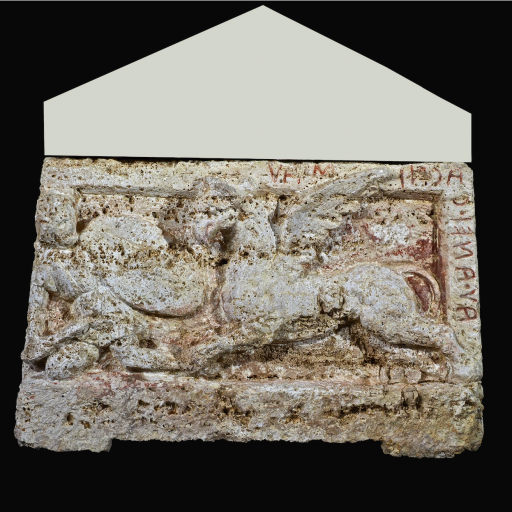
Nel caso dell’urna 28, nella precedente esposizione, la cassa era stata erroneamente associata a un coperchio non pertinente, attribuibile alla gens Veti. In occasione del riallestimento 2026, in assenza del coperchio originario, si è optato per una riproduzione inornata dello stesso.
Sulla cassa è un guerriero con grande scudo circolare, armato di spada. È stato gettato a terra da un grifone, con corpo leonino, ali e becco aquilini, orecchie di tipo equino/asinino, secondo una iconografia giunta anche in Etruria dal Vicino Oriente grazie agli intensi traffici mediterranei in epoca orientalizzante (VIII-VII sec. a.C.). La lotta, frequente sulle urne ellenistiche perugine, vede coinvolti gli Arimaspi, mitici abitanti delle regioni settentrionali della Scizia, presso i monti Urali, in perenne contrasto con i grifoni per la conquista dell’oro di Apollo e della preziosissima ambra legata al culto del dio del Sole. In ambito funerario la lotta tra Grifi e Arimaspi simboleggia le insidie e le difficoltà che il defunto incontra nel suo viaggio verso l’Oltretomba. Solo al termine di una dura prova e di una coraggiosa lotta, l’eroe (il defunto) ha diritto a conquistare il proprio oro: la vita eterna nell’ultima felice destinazione dei Campi Elisi. Nello stesso tempo, non deve stupire che il grifone, come tutte le creature ibridi e potenti, possa proteggere il sepolcro e accompagnare, in funzione di psicopompo, il defunto verso l’Aldilà (famiglia dei Pumpu Snute, 24).
Immagini:
- Urna 11.
- Urna 27.
- Urna 28.
Cacni
Griffins, Arimaspi, Double Family Names and Adopted Children
The Cacni are attested in the Perugian area by at least three tombs. The earliest, discovered and illegally looted in 2003 at Elce (Perugia) and recovered in 2013, contained a sarcophagus and 22 cinerary urns, only one of them belonging to a woman and one intended for a married couple.
In 1843, another hypogeum belonging to the family came to light at San Pietro, in the Frontone necropolis. With the exception of one male burial, this was predominantly a female tomb.
The third Cacni tomb, discovered in 1844 near the Villa del Palazzone, contained three urns (11, 27, 28), belonging to two men and a woman (11), perhaps the wife of La(rth) Cacni (27).
The other man buried in the tomb was Aule Anei Cacniś Auleś (28), with Cacni used as a ‘cognomen’ for the Anei family.
Despite the small number of urns in the hypogeum, which might suggest a close-knit family group, the relationship between Aule Anei Cacni and the possible married couple buried in the tomb is difficult to explain. An adoption relationship between the Anei and Cacni families has therefore also been proposed, with Aule Anei Cacni representing the result of such a relationship and consequently having been buried in the tomb of a close relative.
In the Etruscan naming system, in addition to the personal name and the family name, a third element could occur, identifiable as a ‘cognomen’ or second gentilicium. In this case, it probably indicates a branch of the family formed as a result of a kinship relationship established between the gentes Anei and Cacni, perhaps arising from inheritance arrangements, marriage alliances or actual adoptions. In the absence of more specific evidence, however, the existence of such relationships can only be hypothesised.
Urn 27 features the motif of an amphora set into the ground, around which four figures are arranged (for the same subject, see also the Vipi Vercna family, 48).
In the case of urn 28, in the previous display the chest had been incorrectly paired with an unrelated lid attributable to the gens Veti. For the 2026 redisplay, in the absence of the original lid, an undecorated reproduction of it has been chosen.
The chest depicts a warrior armed with a sword and carrying a large round shield. He has been thrown to the ground by a griffin, with a lion’s body, wings and an eagle’s beak, and equine or ass-like ears. This iconography reached Etruria from the Near East through the intense Mediterranean trade networks of the Orientalising period (eighth–seventh centuries BC). The combat scene, frequently depicted on Hellenistic cinerary urns from Perugia, involves the Arimaspi, mythical inhabitants of the northern regions of Scythia, near the Ural Mountains, who were perpetually at odds with griffins over the possession of Apollo’s gold and the precious amber associated with the cult of the Sun god. In a funerary context, the struggle between Griffins and Arimaspi symbolises the dangers and difficulties encountered by the deceased on the journey to the Underworld. Only after undergoing a strenuous trial and fighting bravely can the hero —the deceased— claim his own gold: eternal life in the final, blessed destination of the Elysian Fields. At the same time, it is hardly surprising that the griffin, like all powerful hybrid creatures, could protect the tomb and accompany the deceased to the afterlife in the role of a psychopomp (see the Pumpu Snute family, 24).
Images:
- Urn 11.
- Urn 27.
- Urn 28.
Galleria fotografica (scorri)
25 September 2026
1 urna 11
25 September 2026
2 urna 27
25 September 2026
3 urna 28
Ultimo aggiornamento
29 Settembre 2026, 15:53