 Musei nazionali di Perugia – Direzione regionale Musei nazionali Umbria
 CAFATE
Cafate
Una battaglia tra Greci e Persiani
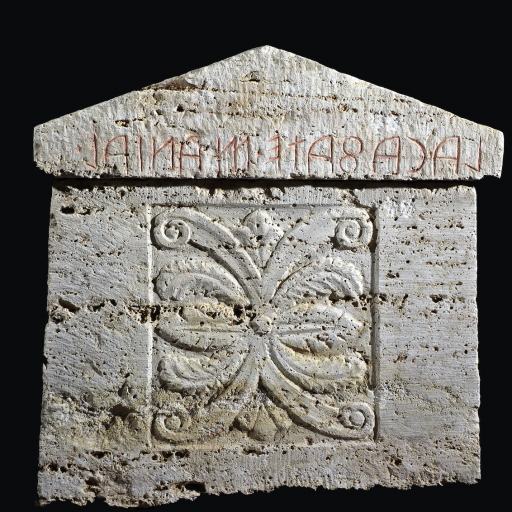
Di questa famiglia (II sec. a.C.), attestata epigraficamente anche in riferimento ai Velimna/Volumni (una donna della gens era la madre di Publius Volumnius Violens) conosciamo un ipogeo composto da sole 4 urne, di cui due appartenute a mogli dei Cafate (7, 40), una a un uomo (Larth Cafate, 23), una a Larthi Cafati figlia di una Titi/Titia (39).
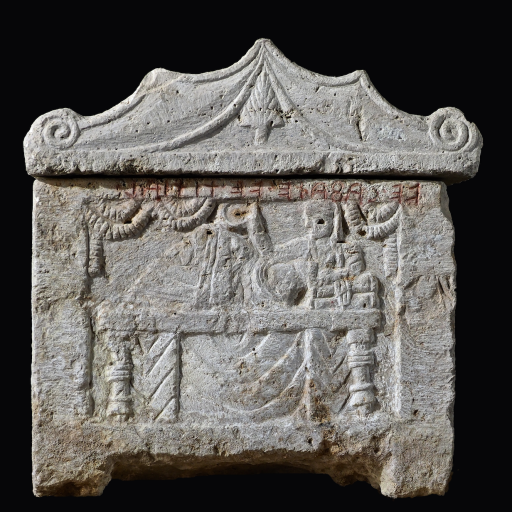
Alla stessa tomba potremmo attribuire forse anche l’urna di Vel Cafate, figlio di Vel e di una Titi/Titia, fratello di Larthi Cafati, con scena di banchetto sulla cassa (52).
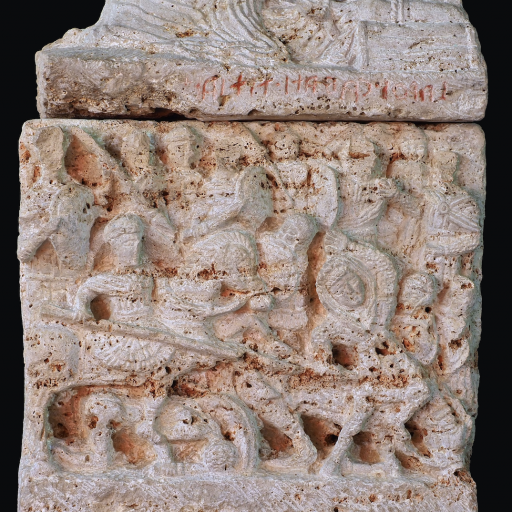
Nel precedente allestimento il coperchio dell’urna 39 era associato a una cassa non pertinente: la presentazione attuale è frutto delle ricerche condotte sulle fonti documentarie disponibili.
Larthi Cafati (39), priva oggi della testa, avvolta in un chitone drappeggiato e finemente ingioiellata, è adagiata su morbidi cuscini; nella mano sinistra tiene un ventaglio (flabello), nella destra, verosimilmente un fiore, come spesso documentato per le figure femminili.
Il fronte della cassa è occupato da una articolata rappresentazione di battaglia scolpita a rilievo, riconducibile ai conflitti tra Greci e Persiani. La scena è organizzata secondo un impianto narrativo serrato, all’interno del quale emerge un personaggio a cavallo armato di lunghissima asta, identificabile con il condottiero macedone Alessandro Magno, colto nel gesto risolutivo dell’attacco contro un antagonista verosimilmente di rango elevato, che sulla base del costume indossato (larghi pantaloni alle caviglie), possiamo identificare come un guerriero persiano (la stessa battaglia per le urne 37, Afle e 74, Tite Petruni).
Il soggetto rientra nel filone figurativo, di provenienza greca, che celebra le vittorie elleniche sull’Oriente e che trova riscontro, in forma più complessa e monumentale, nell’eccezionale mosaico pavimentale della Casa del Fauno a Pompei. In ambito funerario la battaglia è metafora della morte stessa ma anche del valore del defunto che, novello Alessandro Magno, affronta pericoli e insidie, non solo nel corso della vita, ma anche nel viaggio verso l’Aldilà risultandone vittorioso e raggiungendo le beate dimore dei Campi Elisi.
L’origine del rilievo va ricercata in modelli compositivi di ampio respiro, dai quali l’artigiano ha isolato un segmento adattandolo allo spazio ridotto della cassa, con conseguente addensamento delle figure e semplificazione dell’impianto originario. La contrapposizione tra i due schieramenti è enfatizzata da tratti distintivi chiaramente riconoscibili, in particolare l’abbigliamento esotico dei combattenti orientali, che sottolinea la diversità tra Greci e Persiani, secondo una convenzione iconografica codificata e funzionale alla narrazione storica e simbolica del tema.
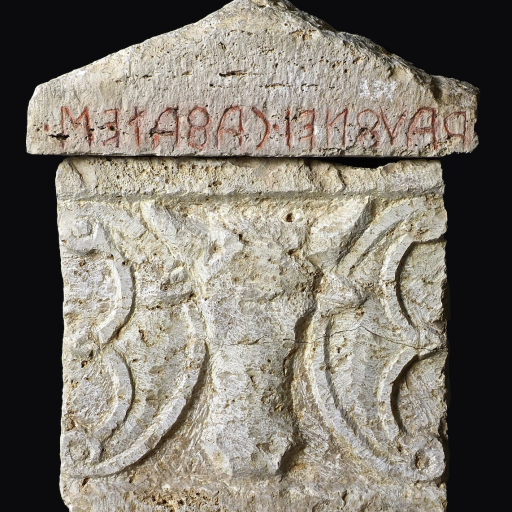
Tra i motivi decorativi anche una testa di toro (bucranio) tra pelte (40), che rimanda all’abitudine rituale, di origini remote, di appendere i crani degli animali sacrificati, per scopi propiziatori o protettivi (apotropaici) e che diviene un elemento ornamentale e simbolico molto popolare, in Grecia, Roma e in Etruria.
Immagini:
- Urna 23.
- Urna 39.
- Urna 40.
- Urna 52.
Cafate
A Battle between Greeks and Persians
This family (second century BC) is also attested epigraphically in connection with the Velimna/Volumni family (a woman of the gens was the mother of Publius Volumnius Violens). Their hypogeum contained only four urns: two belonged to wives of the Cafate (7, 40), one to a man, Larth Cafate (23), and one to Larthi Cafati, daughter of a Titi/Titia (39).
The urn of Vel Cafate, son of Vel and a Titi/Titia and brother of Larthi Cafati, may perhaps also be attributed to the same tomb. Its chest bears a banquet scene (52).
In the previous display, the lid of urn 39 had been associated with an unrelated chest; the present arrangement is the result of research into the available documentary sources.
Larthi Cafati (39), now headless, is reclining on soft cushions. She is wrapped in a draped chiton and richly adorned with jewellery; in her left hand she holds a fan (flabellum), while in her right she presumably holds a flower, as is frequently found in depictions of female figures.
The front of the chest is occupied by an elaborate battle scene carved in relief, identifiable as a conflict between Greeks and Persians. The scene is organised as a tightly structured narrative, dominated by a mounted figure armed with an exceptionally long spear, identifiable as the Macedonian commander Alexander the Great. He is depicted at the decisive moment of his attack on an opponent who was probably of high rank and wears loose trousers gathered at the ankles. On the basis of his costume he can be identified as a Persian warrior (the same battle is depicted on urns 37, Afle, and 74, Tite Petruni).
The subject belongs to a Greek-derived artistic tradition celebrating Greek victories over the East, which finds a more complex and monumental expression in the exceptional floor mosaic from the House of the Faun at Pompeii. In a funerary context, the battle is a metaphor for death itself, but also for the courage of the deceased, who, like a new Alexander the Great, confronts dangers and challenges not only during life but also on the journey to the afterlife, emerging victorious and reaching the blessed dwellings of the Elysian Fields.
The relief derives from broad, large-scale compositional models, from which the craftsman isolated a single section and adapted it to the limited space of the chest, resulting in a denser arrangement of figures and a simplification of the original composition. The opposition between the two sides is emphasised through clearly recognisable features, particularly the exotic dress of the eastern warriors, which underscores the difference between Greeks and Persians, according to an established iconographic convention serving both the historical and symbolic narrative of the subject.
Among the decorative motifs is a bull’s head (bucranium) between pelta shields (40), recalling the ancient ritual practice of hanging the skulls of sacrificed animals for propitiatory or protective (apotropaic) purposes. The motif subsequently became a highly popular ornamental and symbolic element in Greece, Rome and Etruria.
Images:
- Urn 23.
- Urn 39.
- Urn 40.
- Urn 52.
Galleria fotografica (scorri)
25 September 2026
1 urna 23
25 September 2026
2 urna 39
25 September 2026
3 urna 40
25 September 2026
4 urna 52
Ultimo aggiornamento
29 Settembre 2026, 15:55