 Musei nazionali di Perugia – Direzione regionale Musei nazionali Umbria
 CAI TUSNU
Cai Tusnu
Gusci d’uovo, grifonesse e insidie del mare
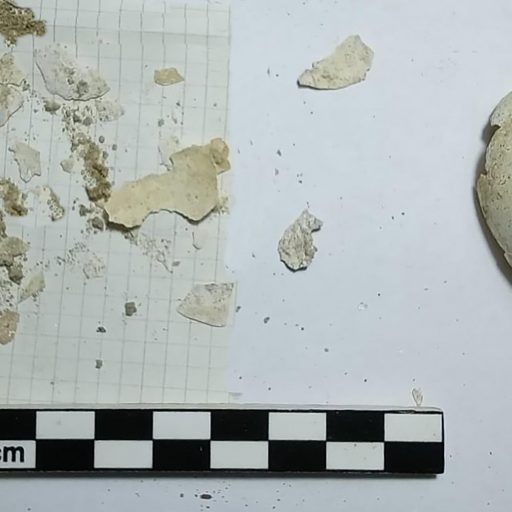
La tomba, scoperta nel 1842 nei pressi dell’Ipogeo dei Volumni, conteneva 6 urne cinerarie di cui solo 2 con iscrizioni. All’interno del sepolcro è stata segnalata la presenza di vasellame di varie fogge, tra cui frammenti di askos (piccolo vaso panciuto) con il bollo del ceramista sul manico (il perugino Atrane che produce e firma questa forma speciale) e gusci d’uovo. Tra le offerte di pasto funebre è frequente, anche nella necropoli del Palazzone, la presenza di uova (esposte all’Antiquarium), un cibo altamente proteico ma anche un potente simbolo, nel Mondo Antico, di nutrimento, nascita e rinascita, auspicio di vita per l’Aldilà.
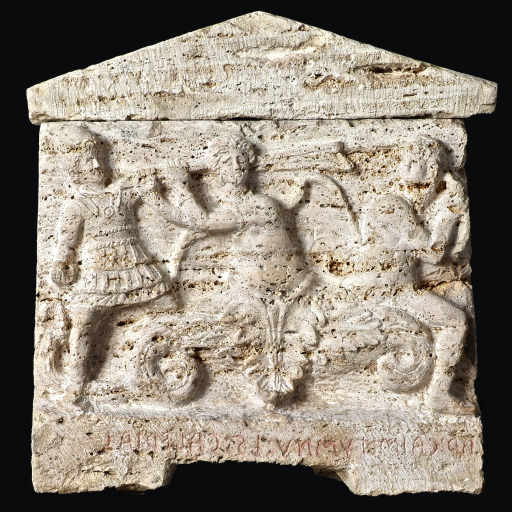
L’urna di Ar(nth) Caiś Tuśnu L(ari)s(al) Calerial (41) illustra un mito molto frequente nella produzione fittile e lapidea ellenistica. Al centro della composizione, fra due personaggi armati, è una Scilla alata e bicaudata, raffigurata di prospetto, mentre brandisce un remo/timone, nell’atto di sferrare il colpo, così come avvenne, secondo il mito, contro i compagni e la nave di Ulisse. Una sorta di perizoma vegetale (alghe) copre la parte inferiore del corpo, unendo la porzione superiore, umana, alle code pisciformi. La composizione si sviluppa su un unico piano, con figure a rilievo piuttosto basso, caratterizzate da una resa sommaria dei volumi e da un trattamento schematico sia delle anatomie sia degli elementi dell’armamento. Tale impostazione riflette modalità esecutive tipiche della produzione seriale di urne etrusche, nelle quali il dato narrativo viene condensato in forme essenziali ma efficaci. L’iconografia ben si presta ad una rappresentazione simbolica del rovesciamento dei valori terreni nell’Aldilà: remi, timoni e ancore sono strumenti che l’uomo impiega abitualmente per acquisire stabilità, mobilità e, in ultima analisi, salvezza sul mare. Nelle mani di Scilla si trasformano in minacciosi strumenti di morte e nelle insidie che il defunto deve superare per raggiungere i Campi Elisi.
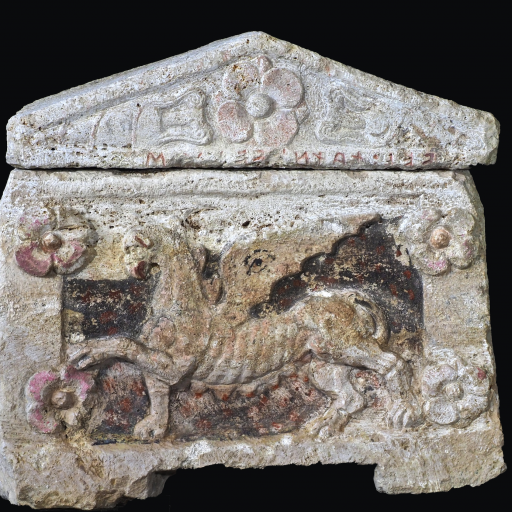
Nell’urna di Vel Tatni Veḷụś (53) che non ha vincoli apparenti di parentela con i Cai Tusnu, la grifonessa (caratterizzata da mammelle) che solleva la zampa anteriore, presenta un occhio dipinto sull’ala, un motivo apotropaico che accentua la valenza simbolica della creatura, guardiana del sepolcro e del limite tra vivi e morti, e allude a capacità di vigilanza e attenzione, alla possibilità di “vedere e spaventare” il male allontanando influssi negativi e mortiferi. Con il restauro dell’urna, nel 2026, è riapparsa la vivace policromia originaria: lo sfondo è blu notte con punti sparsi di colore rosso così come il becco, le orecchie e le mammelle della grifonessa; l’occhio è dipinto in nero; le quattro rosette angolari sono rosa pastello.
Sul motivo del grifone nella produzione ellenistica perugina anche le urne 24, Pumpu Snute e 28, Cacni.
Immagini:
- Urna 41.
- Urna 53.
- Gusci d’uovo, Tomba 115 Palazzone (esposta all’Antiquarium), foto al momento del restauro.
Cai Tusnu
Eggshells, Female Griffins and the Perils of the Sea
The tomb, discovered in 1842 near the Hypogeum of the Volumni family, contained six cinerary urns, only two of which bore inscriptions. Various types of pottery were reported inside the tomb, including fragments of an askos (a small, globular vessel) bearing the potter’s stamp on the handle, belonging to the Perugian Atrane, who produced and signed this distinctive vessel form, as well as eggshells. Eggs are frequently found among funerary food offerings, including at the Palazzone necropolis (on display in the Antiquarium). They were a highly nutritious food, but also a powerful symbol in the Ancient World of nourishment, birth and rebirth, and thus an auspicious sign of life in the afterlife.
The urn of Ar(nth) Caiś Tuśnu L(ari)s(al) Calerial (41) depicts a myth frequently represented in Hellenistic ceramic and stone production. At the centre of the composition, between two-armed figures, is a winged, two-tailed Scylla, shown frontally as she wields an oar or rudder and prepares to strike, as, according to the myth, she did against Odysseus’ companions and ship. A sort of vegetal loincloth made of seaweed covers the lower part of her body, joining the human upper section to the fish-like tails. The composition unfolds on a single plane, figures are rendered in relatively low relief and characterised by a summary treatment of volumes and a schematic rendering of both the anatomy and the elements of the armour and weaponry. This technical approach is typical of the serial production of Etruscan urns, in which the narrative is condensed into forms that are simple yet effective. The iconography lends itself particularly well to a symbolic representation of the reversal of earthly values in the afterlife: oars, rudders and anchors are habitually used by human beings to achieve stability, mobility and, ultimately, safety at sea. In Scylla’s hands, they become threatening instruments of death, embodying the dangers that the deceased must overcome in order to reach the Elysian Fields.
The urn of Vel Tatni Veḷụś (53), who appears to have no apparent family connection with the Cai Tusnu, depicts a female griffin, identifiable by her breasts, raising her foreleg. A painted eye appears on her wing, an apotropaic motif that reinforces the symbolic significance of the creature as guardian of the tomb and of the boundary between the living and the dead. It also evokes the capacity for vigilance and watchfulness, and the power to ‘see and frighten’ evil away, warding off harmful and deadly influences. The restoration of the urn in 2026 revealed its original, vivid polychromy: the background is midnight blue, with scattered red dots, including the griffin’s beak, ears and breasts; her eye is painted black; and the four corner rosettes are in pastel pink.
For the motif of the griffin in Hellenistic production from Perugia, see also urns 24, Pumpu Snute, and 28, Cacni.
Immagini:
- Urn 41.
- Urn 53.
- Eggshells, Tomb 115 in the Palazzone necropolis (displayed in the Antiquarium), photo taken during conservation work.
Galleria fotografica (scorri)
25 September 2026
1 urna 41
25 September 2026
2 urna 53
25 September 2026
3 gusci d'uovo tomba 115 Palazzone
Ultimo aggiornamento
29 Settembre 2026, 15:56