 Musei nazionali di Perugia – Direzione regionale Musei nazionali Umbria
 VETI
Veti
Gorgoni, Vanth e contaminazioni iconografiche
Scoperte nel 1843 al Palazzone, le due tombe della famiglia Veti hanno restituito complessivamente 17 urne con iscrizioni riferibili a uomini e donne: 6 sono oggi esposte sui gradoni dell’Ipogeo. Difficile ricostruire l’albero genealogico e mettere le due tombe in connessione con un ulteriore sepoltura della famiglia scoperta a poca distanza (loc. Ponticello di Campo) nel 1925-26.
Oltre a membri della famiglia Veti sono presenti altri gentilizi femminili ad es. Veilia Caiia (urna dispersa) e la figlia Larthi Śalvi Caial śec (urna dispersa, śec significa “figlia”), legate con i Veti da vincoli di parentela che ci sfuggono e separate dai propri uomini perché sepolti in una tomba a prevalenza maschile.
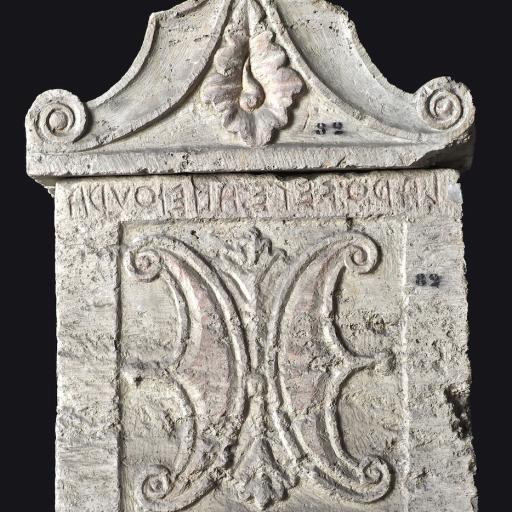
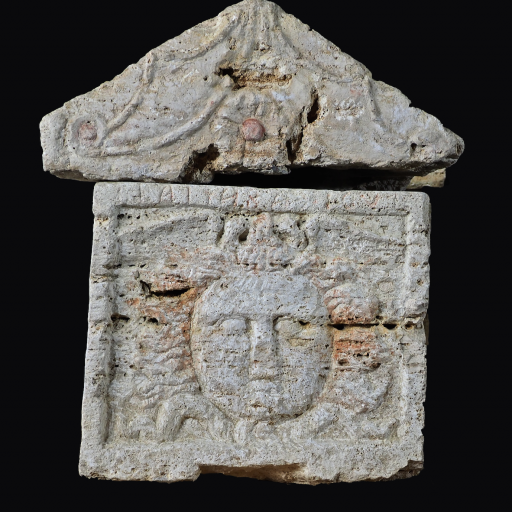
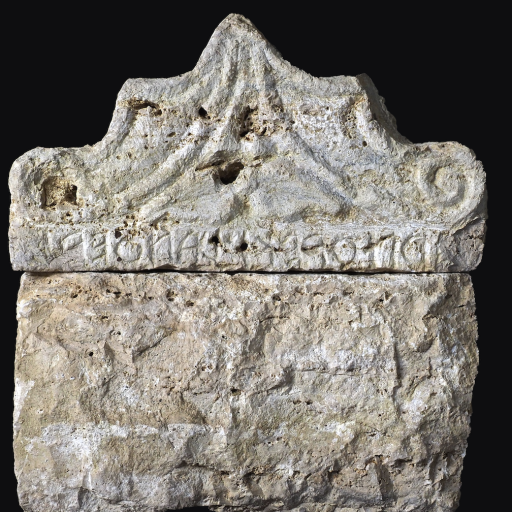
Le urne sono generalmente di fattura semplice e prive di sculture sul coperchio. Tra le decorazioni ricorrono motivi apotropaici come la Gorgone, presente sull’urna di Spuri Cafatial (43). Più articolato è il rilievo sull’urna di Larθ Vete Aneithura (14), con coperchio fastigiato decorato da un fiore d’acanto stilizzato e cassa ornata da due pelte affrontate. L’urna di Arnθ Veti Lartheal (30) conserva invece un elegante motivo floreale a tre petali sul coperchio.
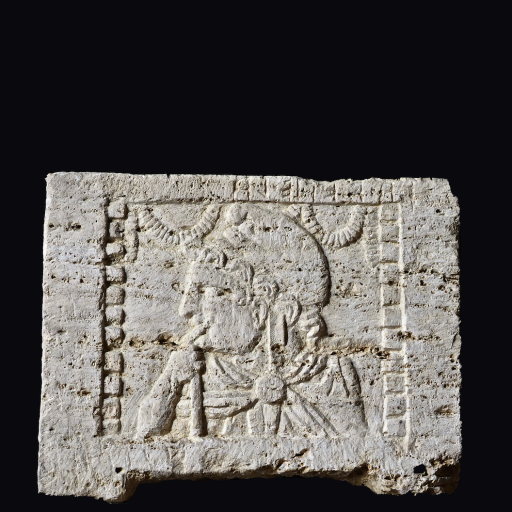
La(rth) Vetie La(rthial) (31), ha sul fronte della cassa un busto maschile rivolto a sinistra, avvolto nel mantello, con berretto frigio (a punta) e bastone appoggiato alla spalla, forse il defunto in viaggio verso l’Aldilà.
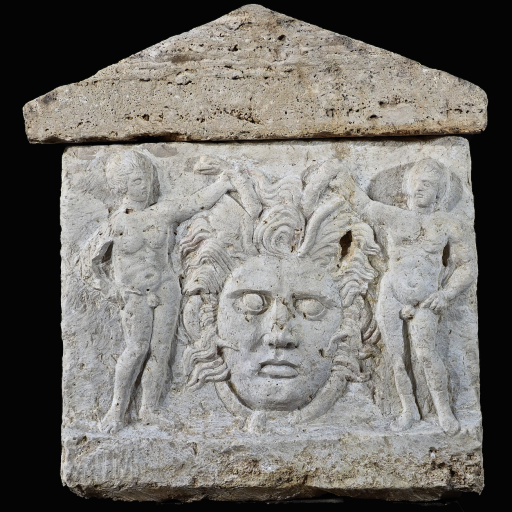
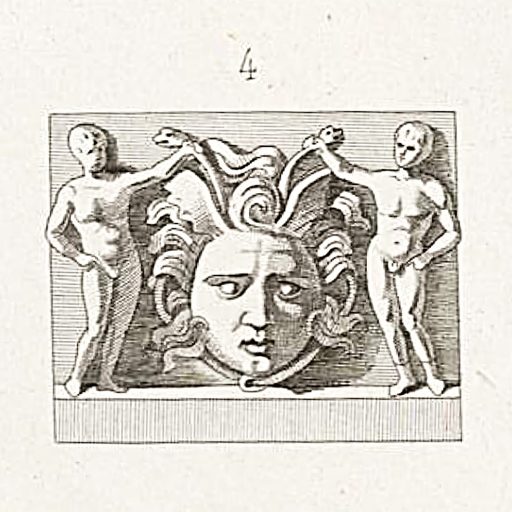
Peculiare è l’urna di Fasti Veti (55). La fronte della cassa è dominata dalla grande testa alata di Medusa, circondata da serpenti intrecciati alla chioma. Ai lati due giovani nudi afferrano i serpenti forse a trattenere la Gorgone e i suoi poteri di morte.
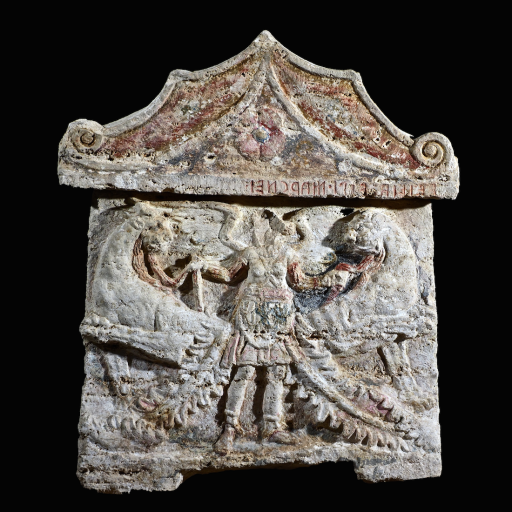
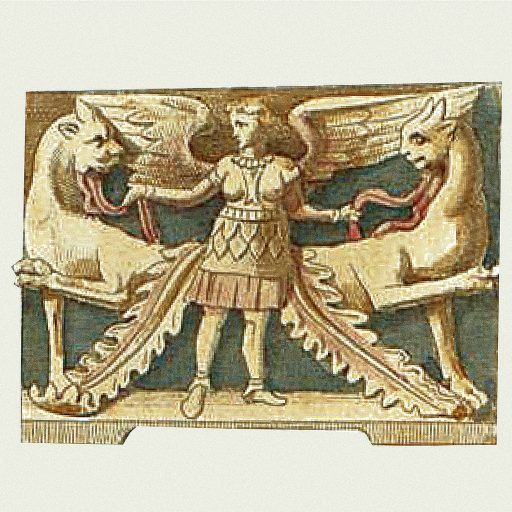
Di grande interesse è anche l’urna di Veilia Veti Marcnei (65), con un rilievo caratterizzato da ricca policromia, riemersa con il restauro 2026. Al centro della composizione è una Vanth, demone femminile alato, con abito corto, calzari e seno scoperto, che trattiene due pantere al guinzaglio in una composizione perfettamente simmetrica. Al mare e a Scilla, rimandano le lunghe alghe ai lati della figura mentre l’intera composizione riecheggia il motivo della Pòtnia Theròn, la “Signora delle belve”, iconografia di origine orientale reinterpretata in chiave etrusca con la fusione del modello della dea, simbolo del controllo sulla natura, con il demone femminile, che presidia l’accesso all’Aldilà e trattiene le fiere mortifere, agevolando idealmente al defunto il suo cammino.
Immagini:
- Urna 14.
- Urna 43.
- Urna 30.
- Urna 31.
- Urna 55.
- Urna 55, disegno tratto da G.C. Conestabile, G.B. Vermiglioli, Dei Monumenti di Perugia etrusca e romana, Perugia, 1855-1870.
- Urna 65.
- Urna 65, disegno tratto da C. Conestabile, G.B. Vermiglioli, Dei Monumenti di Perugia etrusca e romana, Perugia, 1855-1870.
Veti
Gorgons, Vanth and Iconographic Influences
Discovered in the area of the Palazzone necropolis in 1843, the two tombs of the Veti family yielded a total of seventeen cinerary urns bearing inscriptions referring to both men and women. Six of these are now on the stepped display at the entrance of the Hypogeum of the Volumni family. Reconstructing the family tree is challenging, as is establishing the relationship between these two tombs and a further burial of the same family, discovered nearby at Ponticello di Campo in 1925–26.
In addition to members of the Veti family, the inscriptions include women belonging to other families, such as Veilia Caiia (urn now lost) and her daughter Larthi Śalvi Caial śec (urn now lost; śec means daughter). Their exact relationship to the Veti family remains unknown, and they appear to have been buried separately from their male relatives, who were in a predominantly male family tomb.
The urns are generally plain in design and lack sculpted figures on their lids. Their decoration frequently features apotropaic motifs, such as the Gorgon’s head on the urn of Spuri Cafatial (43). More elaborate is the relief on the urn of Larθ Vete Aneithura (14), whose gabled lid is decorated with a stylised acanthus flower, while the chest is adorned with two confronting peltae. The urn of Arnθ Veti Lartheal (30), by contrast, preserves an elegant three-petalled floral motif on its lid.
The urn of La(rth) Vetie La(rthial) (31) is decorated on the front of its chest with the bust of a man facing left, wrapped in a cloak and wearing a pointed Phrygian cap. He carries a staff resting on his shoulder and may represent the deceased on his journey to the Afterlife.
Particularly noteworthy is the urn of Fasti Veti (55). The front of the chest is dominated by the large winged head of Medusa, surrounded by serpents entwined in her hair. On either side, two naked youths grasp the snakes, perhaps restraining the Gorgon and her deadly powers.
Also of exceptional interest is the urn of Veilia Veti Marcnei (65), whose relief, distinguished by its rich polychromy, was revealed once again during the 2026 conservation treatment. At the centre of the composition stands Vanth, the winged female demon, wearing a short tunic and boots, with one breast exposed, holding two panthers on leashes in a perfectly symmetrical composition. The long strands of seaweed flanking the figure allude to the sea and to Scylla, while the overall composition echoes the motif of the Potnia Theron (‘Mistress of Animals’), an iconography of Near Eastern origin reinterpreted in an Etruscan context. Here, the image of the goddess, symbolising dominion over nature, merges with that of the female demon who guards the threshold of the Afterlife and restrains the deadly beasts, thus symbolically easing the deceased’s passage into the world beyond.
Immages:
- Urn 14.
- Urn 43.
- Urn 30.
- Urn 31.
- Urn 55.
- Urn 55, drawing fromC. Conestabile, G.B. Vermiglioli, Dei Monumenti di Perugia etrusca e romana, Perugia, 1855-1870.
- Urn 65.
- Urn 65, drawing fromC. Conestabile, G.B. Vermiglioli, Dei Monumenti di Perugia etrusca e romana, Perugia, 1855-1870.
Galleria fotografica (scorri)
25 September 2026
1 urna 14
25 September 2026
2 urna 43
25 September 2026
3 urna 30
25 September 2026
4 urna 31
25 September 2026
5 urna 55
25 September 2026
6 urna 55
25 September 2026
7 urna 65
25 September 2026
8 urna 65
Ultimo aggiornamento
30 Settembre 2026, 09:57