 Musei nazionali di Perugia – Direzione regionale Musei nazionali Umbria
 ACSI
Acsi
Bottini di guerra e cimeli di famiglia
La tomba, scoperta nel 1843 accanto a quella dei Velimna/Volumni, ha restituito 16 iscrizioni incise sulle urne e 11 su lamina di piombo (per le iscrizioni su piombo anche le famiglie Vipi Verna e Petru e Trile)
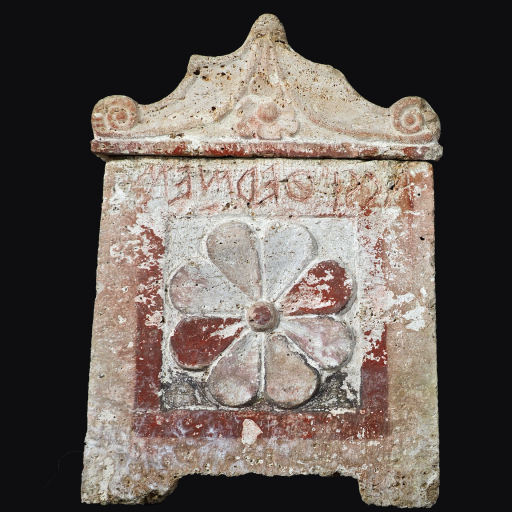
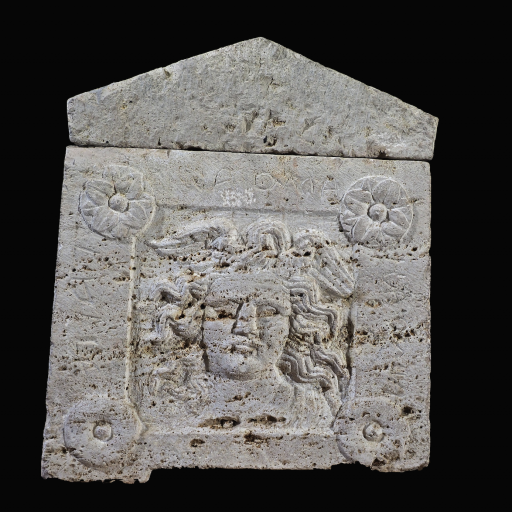
I cinerari appartengono prevalentemente a uomini. Fa eccezione l’urna 64 con una bella testa di gorgone sulla cassa che, stando alla lamina plumbea associata, ospitava i resti combusti di un uomo e di una donna, Arnth Acsiś Arnthial Palpe e Larthi Caprti. È possibile rintracciare anche madri e mogli di alcuni dei defunti, sepolte altrove, ad esempio nella tomba dei Petru e Trile, o della famiglia Veti. Due donne della gens, Acsi Hermeś (29) e Acsi Uvilaneś (urna dispersa) sono state rinvenute – senza i loro mariti – in una ulteriore piccola tomba della necropoli del Palazzone scoperta nel 1857.
Infine, l’urna (presso privati) con iscrizione lautn/famiglia e motivo floreale sulla cassa, potrebbe essere stata destinata a familiares, a servi cioè della gens, ipotesi plausibile anche se non dimostrabile.
I metronimici (i nomi delle madri) indicano undici gentilizi (nomi di famiglia) diversi e suggeriscono che la tomba ospitasse cugini o parenti di secondo grado, piuttosto che una linea familiare unica.
L’ipogeo si distingue per l’eccezionalità di alcuni oggetti di corredo.
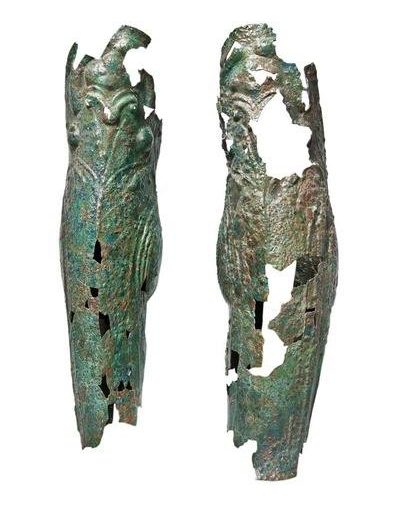
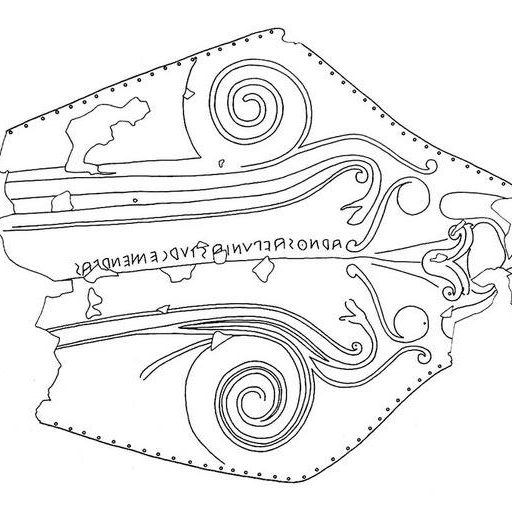
Si segnala una coppia di schinieri di bronzo di origine greca o magnogreca (conservati al Museo archeologico nazionale dell’Umbria), dedicati a Minerva con iscrizione in etrusco meridionale (volsiniese?) datata per lo più tra fine VI e V sec. a.C. Giovanni Colonna ha suggerito che questi schinieri siano stati un bottino di guerra, strappato da un combattente etrusco al nemico e dedicato in un santuario della città etrusca di Volsinii/Orvieto. Dopo la distruzione di Volsinii del 264 a.C., sarebbero stati gli alleati dei Romani a spartirsi il nuovo bottino di guerra e gli Acsi ad entrare in possesso degli schinieri, finiti poi nella tomba di famiglia.
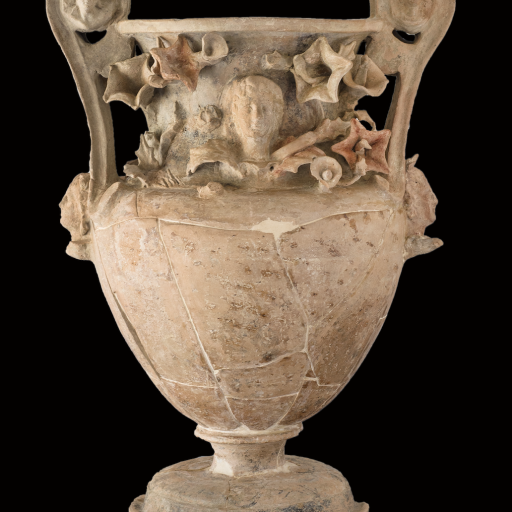
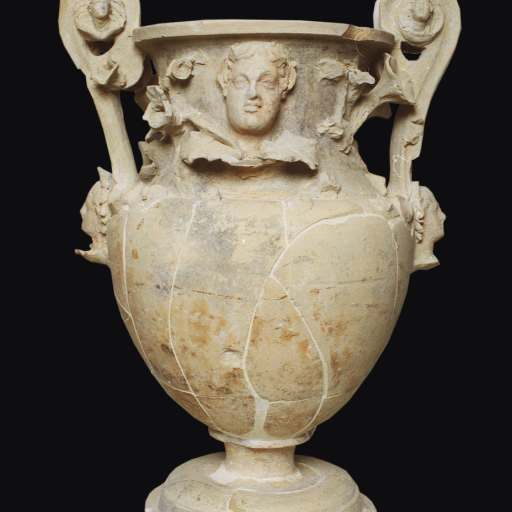
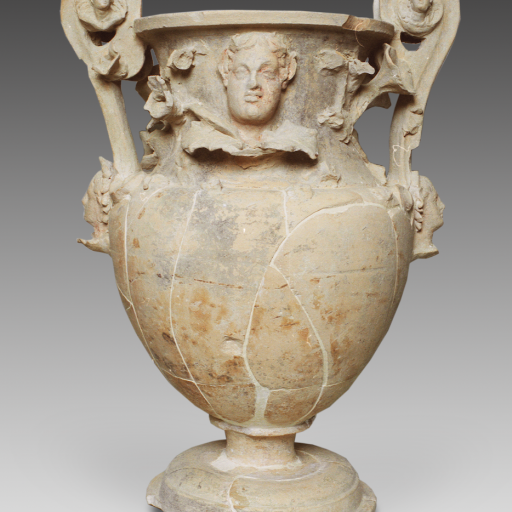
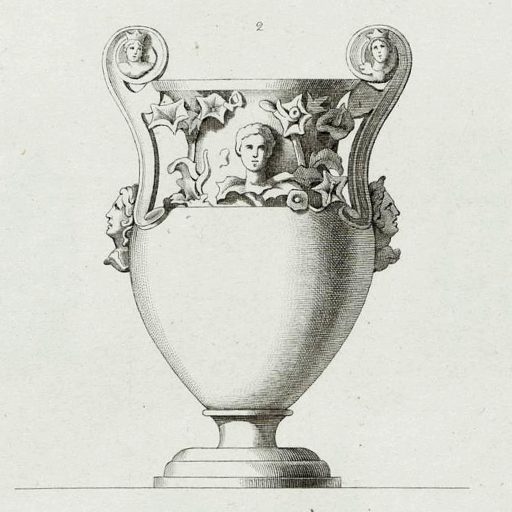
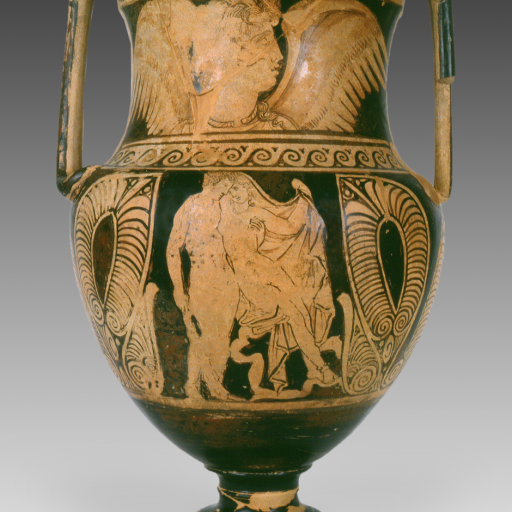
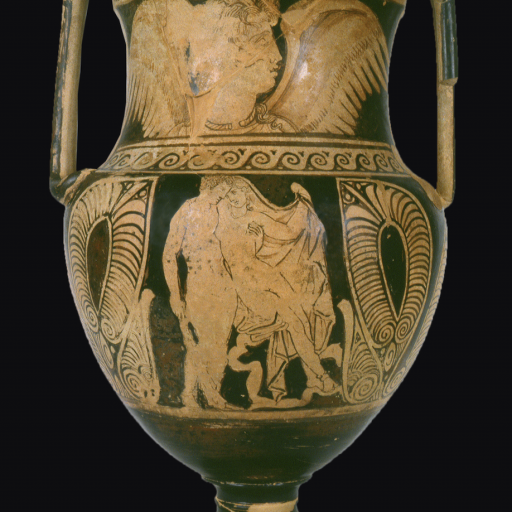
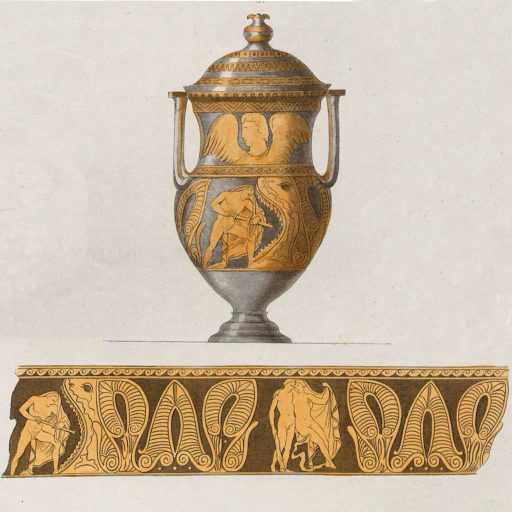
Di particolare pregio ed esposti nell’Antiquarium anche un grande vaso plastico di produzione o ispirazione magno-greca e un cratere a colonnette (kelebe) di fabbrica volterrana del Pittore di Esione, databili nella seconda metà del IV sec. a.C. Anche questi reperti, come gli schinieri, sono attribuibili ad epoca antecedente all’utilizzo del sepolcro (II sec. a.C.) e devono considerarsi probabilmente veri e propri cimeli di famiglia.
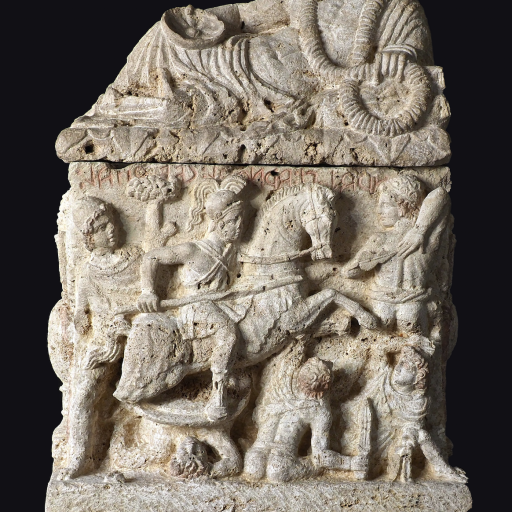
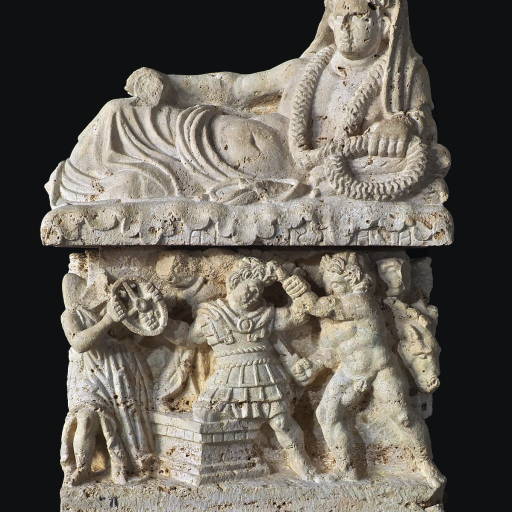
Solo alcune delle urne presentano scene figurate come, quella di Ar(nth) Acsi Arnthal Cvethnal (70) con scena di battaglia o quella di Ar(nth) Acsi La(rthial) (71) con il mito greco dell’uccisione, da parte di Pelope, di Mirtilo, l’auriga colpevole di aver manomesso il carro del re Enomao che uccideva i pretendenti alla mano della figlia Ippodamia, dopo averli vinti in una gara di corsa. Pelope vince la corsa grazie al tradimento di Mirtilo: la ruota che l’auriga tiene in mano è il simbolo di questo misfatto e il mito, che simboleggia la successione violenta e sleale al potere, racconta anche la punizione conseguente al tradimento.
Immagini:
- Urna 29.
- Urna 64.
- Urna 70.
- Urna 71.
- Schinieri (esposti al Museo archeologico nazionale dell’Umbria).
- Schinieri disegno (Archivio DRM-UMB).
- Cratere plastico esposto all’Antiquarium.
- Cratere plastico esposto all’Antiquarium, disegno tratto da G.C. Conestabile, G.B. Vermiglioli, Dei Monumenti di Perugia etrusca e romana, Perugia, 1855-1870.
- Kelebe (cratere a colonnette) esposta all’Antiquarium.
- Kelebe (cratere a colonnette) esposta all’Antiquarium, disegno tratto da G.C. Conestabile, G.B. Vermiglioli, Dei Monumenti di Perugia etrusca e romana, Perugia, 1855-1870.
Acsi
War Booty and Family Heirlooms
Discovered in 1843 beside the Hypogeum of Velimna/Volumni family, this tomb yielded sixteen inscriptions carved on urns and a further eleven inscribed on lead plates (for lead-plate inscriptions, see also the Vipi Verna and Petru e Trile families).
The cinerary urns belonged predominantly to men. One notable exception is urn 64, decorated on its chest with a finely carved Gorgon’s head. According to the associated lead sheet, it contained the cremated remains of both a man and a woman, Arnth Acsiś Arnthial Palpe and Larthi Caprti. The mothers and wives of several of the deceased can also be identified, although they were buried elsewhere, for example in the tombs of the Petru and Trile families or the Veti family. Two women of the gens, Acsi Hermeś (29) and Acsi Uvilaneś (lost urn), were found—without their husbands—in a further small tomb within the Palazzone necropolis, discovered in 1857.
Finally, an urn (now in a private collection), bearing the inscription lautn (‘household’ or ‘family retainers’) and decorated with a floral motif, may have been intended for members of the household attached to the gens—that is, servants or dependants. Although this interpretation cannot be proven, it remains a plausible hypothesis.
The metronymics (the names of the mothers) record eleven different family names (gentilicia), suggesting that the tomb accommodated cousins or more distant relatives rather than a single direct family line.
This hypogeum is particularly remarkable for the exceptional quality of its grave goods.
Among the most significant finds is a pair of bronze greaves of Greek or Magna Graecian origin, now preserved in the Archaeological Museum of Umbria. They bear an inscription in southern Etruscan (perhaps from Volsinii) dedicating them to Minerva and are generally dated to the late sixth or fifth century BC. Giovanni Colonna proposed that these greaves were originally taken as war booty by an Etruscan warrior and dedicated at a sanctuary in the Etruscan city of Volsinii (modern Orvieto). Following the Roman destruction of Volsinii in 264 BC, they may have passed into the possession of Rome’s allies as part of the spoils of war, eventually becoming the property of the Acsi family before being deposited in the family tomb.
Two objects of exceptional quality from this tomb are displayed in the Antiquarium: a large plastic vase – a three-dimensional figural vase of South Italian production or inspiration – and a column-krater (kelebe) made in Volterra in the workshop of the Hesion Painter, both dating to the second half of the fourth century BC. Like the bronze greaves, these artefacts predate the use of the tomb in the second century BC and were probably treasured family heirlooms.
Only a few of the urns bear figured reliefs. Among them is the urn of Ar(nth) Acsi Arnthal Cvethnal (70), decorated with a battle scene, and that of Ar(nth) Acsi La(rthial) (71), illustrating the Greek myth in which Pelops kills Myrtilus, the charioteer who had sabotaged the chariot of King Oenomaus. Oenomaus challenged the suitors of his daughter Hippodamia to a chariot race and killed those he defeated. Pelops won the contest through Myrtilus’ betrayal, symbolised by the wheel held in the charioteer’s hand. The myth, which represents the violent and deceitful transfer of power, also recounts the inevitable punishment that follows treachery.
Images:
- Urn 29.
- Urn 64.
- Urn 70.
- Urn 71.
- Greaves (on display at the Museo archeologico nazionale dell’Umbria).
- Greaves, drawing (DRM-UMB Archive).
- Plastic Krater, on display at the Antiquarium.
- Plastic Krater, on display at the Antiquarium, drawing from G.C. Conestabile, G.B. Vermiglioli, Dei Monumenti di Perugia etrusca e romana, Perugia, 1855-1870.
- Kelebe (column-krater) on display at the Antiquarium.
- Kelebe (column-krater) on display at the Antiquarium, drawing from G.C. Conestabile, G.B. Vermiglioli, Dei Monumenti di Perugia etrusca e romana, Perugia, 1855-1870.
Galleria fotografica (scorri)
24 September 2026
1 urna 29
24 September 2026
2 urna 64
24 September 2026
3 urna 70
24 September 2026
4 urna 71
24 September 2026
5 schinieri
24 September 2026
6 schinieri disegno
24 September 2026
7 Vaso Plastico
24 September 2026
7 Vaso Plastico
24 September 2026
7 Vaso Plastico
24 September 2026
8 Cratere
24 September 2026
9 Kelebe
24 September 2026
9 Kelebe
24 September 2026
10 Kelebe
Ultimo aggiornamento
29 Settembre 2026, 15:48