 Musei nazionali di Perugia – Direzione regionale Musei nazionali Umbria
 PUMPU SNUTE
Pumpu Snute
Corredi dispersi, il grifone e la Porta dell’Ade
La tomba, scoperta il 20 gennaio 1843 vicino all’ipogeo dei Volumni, conteneva 8 urne, oggi in parte disperse o in collezione privata.
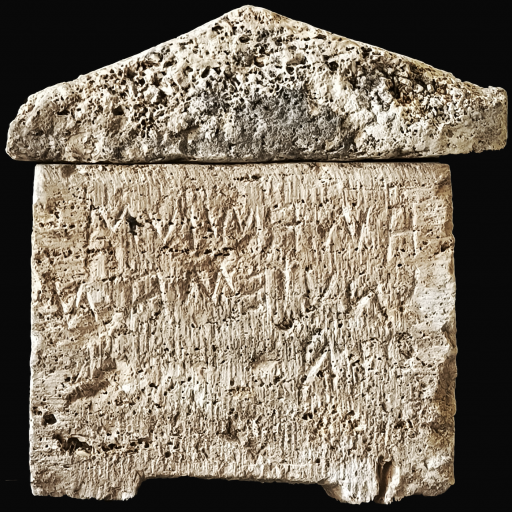
Sono presenti due fratelli, Arnth Pu(m)puś Snuteś Arnthial (9 cassa) e Aule Punpuś Snuteś Arnthial (10, con all’interno ancora conservate le ossa combuste), e forse il padre (e la madre?) di questi, Ar(n)th Pu(m)puś Snuteś puia Velarie (urna dispersa). Non è possibile individuare altre relazioni di parentela tra i defunti, anche se tutti appartengono alla stessa famiglia. Due figlie sono Veilia Snvti Vetial (24) e Snuti Huzetnaś (9 coperchio), le due nuore Fa(sti) Platia Pumpuś Snute(ś) (urna dispersa) e La(r)thi Petruni Snute(ś) (8).
La qualità delle urne di questa tomba è varia.
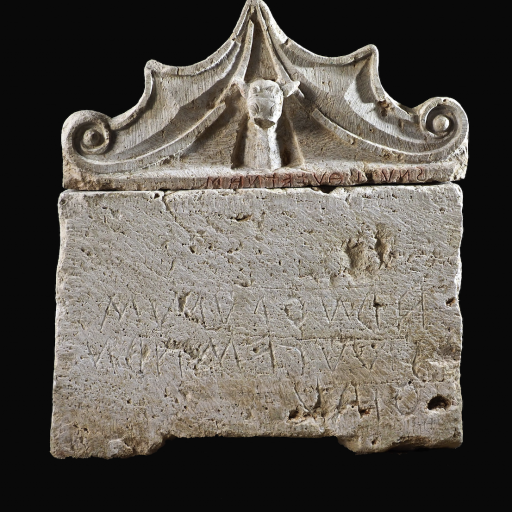
Un coperchio conformato a pelte è quello di Snuti Huzetnaś (9 coperchio) con al centro una testa di ariete a tutto tondo. L’urna di Veilia (24) ha un coperchio semplice, sul quale l’epitaffio è stato rozzamente dipinto in rosso, ma se pertinente, come sembrerebbe, per dimensioni e materiali, è associata una cassa con un bel rilievo con due guerrieri (Arimaspi?) ai lati di un varco arcuato (la Porta dell’Ade) da cui esce un grifone.
Per il grifone sulle urne etrusche perugine e i personaggi a lato del varco arcuato rimandiamo alle famiglie dei Cacni (28) e dei Cai Tusnu (53). Ricordiamo qui che la scena raffigurata sulla cassa dell’urna si inserisce pienamente nel repertorio simbolico etrusco legato al tema della soglia e della transizione tra il mondo dei vivi e quello dei morti. Il grifone, creatura liminale per eccellenza, è spesso rappresentato nell’arte etrusca come custode di porte, recinti sacri e accessi ultraterreni: la sua presenza rimanda dunque alla funzione di guardiano e, al tempo stesso, di intermediario nel passaggio del defunto all’Aldilà. La creatura mitologica è a tutti gli effetti una figura psicopompa, in grado di attraversare e presidiare il confine fra le dimensioni.
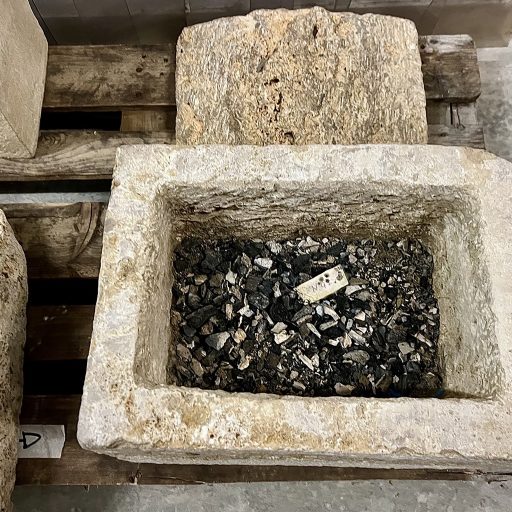
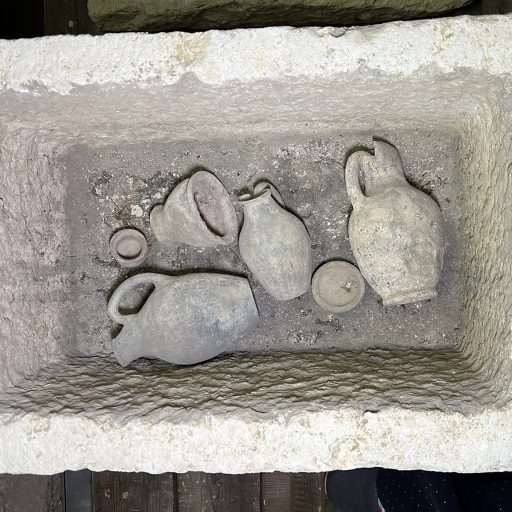
Il restauro eseguito nel 2026, con la riapertura dell’urna 9, ha permesso di documentare la rarissima presenza, all’interno, di oggetti pertinenti al corredo della tomba. Era usanza consolidata, negli scavi ottocenteschi, non prestare molto attenzione al materiale che accompagnava le urne, specie se ceramico e piuttosto ripetitivo. Se non andava disperso, si conservava a parte, perdendo irrimediabilmente l’associazione con la tomba e le singole deposizioni. Così le urne venivano spesso svuotate del contenuto osseo, che parimenti andava disperso, impedendoci oggi di poter analizzare, anche dal punto di vista antropologico e antropometrico, le ossa combuste o inumate. Nella tomba dei Pumpu Snute, eccezionalmente, in un caso sono rimaste le ceneri del defunto (10), in un altro (9) gli scavatori ottocenteschi hanno sostituito il contenuto osseo con parte degli oggetti di corredo (tre brocche, un bicchiere, una ciotolina e un’olletta miniaturistica).
Immagini:
- Urna 9.
- Urna 10.
- Urna 10 interno con ossa combuste e ceneri (foto al momento del restauro).
- Urna 9 interno con vasi (foto al momento del restauro).
Pumpu Snute
Lost Grave Goods, the Griffin and the Gate of Hades
This tomb, discovered on 20 January 1843 close to the Hypogeum of the Volumni family, originally contained eight urns, some of which are now lost or remain in private collections.
Among the individuals buried here are two brothers, Arnth Pu(m)puś Snuteś Arnthial (9, urn chest) and Aule Punpuś Snuteś Arnthial (10), whose cremated remains are still preserved inside the urn. They may have been the sons of Ar(n)th Pu(m)puś Snuteś puia Velarie (urn lost), and possibly of his wife. Although all the deceased belonged to the same family, no further kinship relationships can be established with certainty. Two daughters are recorded as Veilia Snvti Vetial (24) and Snuti Huzetnaś (9, lid), while the daughters-in-law are Fa(sti) Platia Pumpuś Snute(ś) (urn lost) and La(r)thi Petruni Snute(ś) (8).
The urns from this tomb vary considerably in quality.
The lid of Snuti Huzetnaś‘s urn (9) is shaped as a pelta and crowned by a fully sculpted ram’s head. Veilia‘s urn (24) has a simple lid bearing a roughly painted red epitaph. If, as its dimensions and material suggest, it belongs with the associated urn chest, the latter is decorated with a finely carved relief depicting two warriors (perhaps Arimaspi) flanking an arched gateway—the Gate of the Underworld—from which a griffin emerges.
For further discussion of the griffin on Perugian Etruscan urns and of the figures flanking the arched gateway, see the urns of the Cacni family (28) and the Cai Tusnu family (53). The scene carved on the front of the urn belongs to the rich symbolic repertoire of Etruscan funerary art centred on the idea of the threshold between the world of the living and that of the dead. The griffin, a liminal creature par excellence, frequently appears in Etruscan art as the guardian of gateways, sacred enclosures and entrances to the afterlife. Its presence therefore evokes both protection and mediation, accompanying the deceased on the passage to the Underworld. In this sense, the mythical creature functions as a true psychopomp, capable of crossing and guarding the boundary between the worlds of the living and the dead.
During the conservation project carried out in 2026, urn 9 was reopened and revealed the exceptionally rare survival of grave goods inside the vessel. During nineteenth-century excavations, little attention was generally paid to the objects deposited with the urns, especially ceramic vessels, which were often regarded as repetitive and of limited interest. When they were not discarded, they were usually stored separately, permanently losing their association with the tomb and with individual burials. The urns themselves were also frequently emptied of their cremated remains, which were likewise dispersed, making it impossible today to carry out anthropological or osteological analyses of the burnt bones. In the tomb of the Pumpu Snute family, however, two exceptional situations have survived. Urn 10 still contains the cremated remains of the deceased, while in urn 9 the nineteenth-century excavators replaced the bones with part of the funerary assemblage: three jugs, a beaker, a small bowl and a miniature globular pot.
Images:
- Urn 9.
- Urn 10.
- Inside of Urn 10, with burned bones and ashes (photo taken during conservation work).
- Inside of Urn 9 with vessels (photo taken during conservation work).
Galleria fotografica (scorri)
25 September 2026
1 urna 9
25 September 2026
2 urna 10
25 September 2026
3 urna 10 interno
25 September 2026
4 urna 9 interno con vasi
Ultimo aggiornamento
29 Settembre 2026, 15:59