 Musei nazionali di Perugia – Direzione regionale Musei nazionali Umbria
 ACHU/ACONI
Achu/Aconi
La piccola Aconia Quartilla, schiavi, liberti e un astuccio in avorio
La tomba fu scoperta nel 1840 nella necropoli del Palazzone vicino all’ipogeo dei Velimna/Volumni. Probabilmente ospitava 12 urne, 6 delle quali si sono conservate. 7 delle iscrizioni erano in etrusco, 5 in latino. Difficile ricostruire l’albero genealogico della famiglia (II-I sec. a.C.).
Alle prime generazioni d’uso del sepolcro appartengono La(rth) Achu La(rthial) Lu(n)ces e Larthi Casnia, genitori di Ar(nth) Achu La(rthial) (18) e La(rth) Achu La(rthial) Casnial.
L’urna 18 presenta sulla cassa un bel rilievo decorativo con foglie d’edera tra due pelte, scudi semilunati di origine orientale scolpiti spesso sulle urne perugine. L’edera e gli scudi potrebbero alludere alla protezione del defunto, mentre nella pianta tenace e sempreverde riconosciamo anche un auspicio di rinascita e vita oltre la morte.
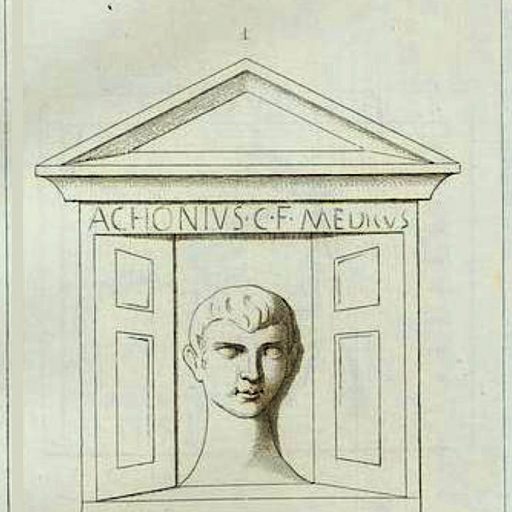
Delle 5 urne con iscrizioni latine, 4 si sono conservate e abbiamo un buon disegno nelle tavole di G.B. Conestabile della quinta.
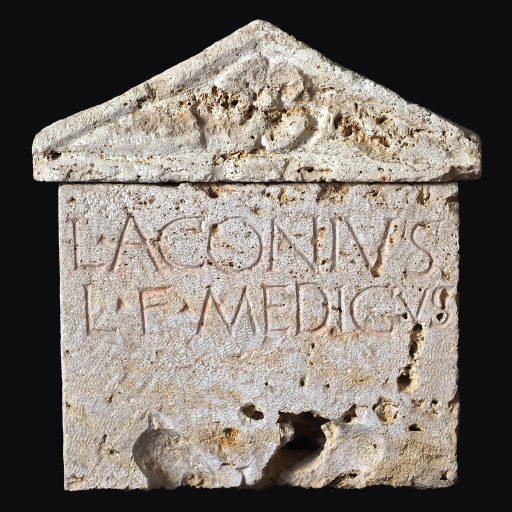
Due, L(ucius) Aconius L(uci) f(ilius) Medicus (35) e Achonius C(ai) f(ilius) Medicus avevano lo stesso cognome (forse anche allusivo della professione di medico), verosimilmente padre e figlio.
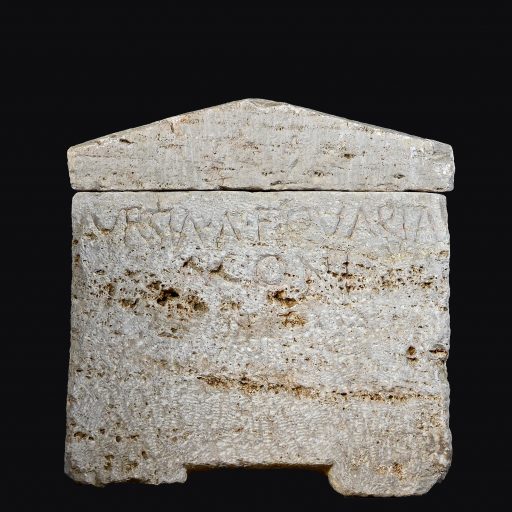
Ursia A(uli) f(ilia) Aconi potrebbe essere la moglie di 35 e la madre di A(ulus) Aconius L(uci) l(ibertus) Urs(ia) gn(atus) (1).
Tuttavia quest’ultimo è uno schiavo liberato mentre la madre sarebbe una donna libera come il padre L(ucius) Aconius L(uci) f(ilius) Medicus (35). Se accettassimo questa parentela ne risulterebbe che Ursia abbia avuto un figlio da uno schiavo del marito, poi liberato dal consorte e divenuto liberto. Una simile interpretazione è difficile da sostenere: non abbiamo dati sufficienti sul mondo etrusco ma nella società romana, in genere (ma non sempre), se una donna libera aveva un figlio da uno schiavo questo era libero perché seguiva la condizione della madre. La famiglia Achu comunque potrebbe aver avuto altri liberti, come nel caso dell’urna di Aconia C(ai) l(iberta) Pumpua andata dispersa.
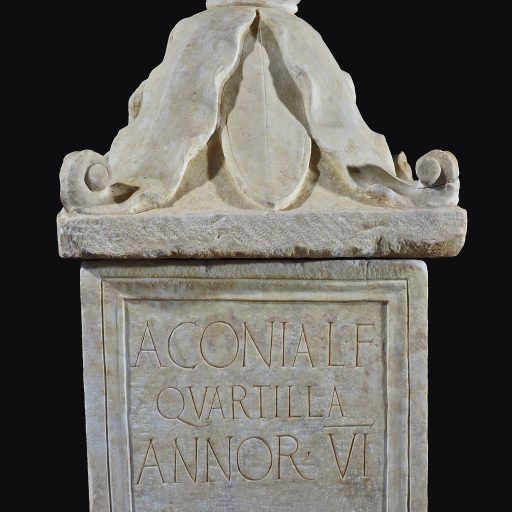
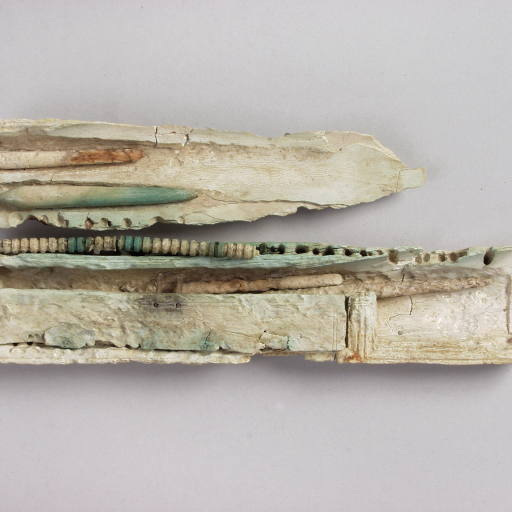
Figlia di Ursia e di Lucius potrebbe essere anche Aconia L(uci) f(ilia) Quartilla annor(um) VI, morta prematuramente a 6 anni, e deposta in una splendida urna in marmo di Luni esposta all’Antiquarium. La bimba, forse quartogenita e così piccolina da essere non Quarta, ma Quartilla, secondo i resoconti di scavo, avrebbe potuto avere con sé un astuccio cilindrico in avorio (esposto all’Antiquarium), che conteneva stili scrittori o strumenti chirurgici, meno probabilmente utensili da cosmesi.
Immagini:
- Urna di Achonius C(ai) f(ilius) Medicus, disegno tratto da G.C. Conestabile, G.B. Vermiglioli, Dei Monumenti di Perugia etrusca e romana, Perugia, 1855-1870.
- Urna di Aconia Quartilla (esposta all’Antiquarium).
- Urna di Ursia (non esposta).
- Urna di Lucius Aconius (35).
- Astuccio in avorio (esposto all’Antiquarium).
Achu/Aconi
The little girl Aconia Quartilla, Slaves, Freedmen and an Ivory Case
This tomb was discovered in 1840 in the Palazzone necropolis, close to the Hypogeum of the Velimna/Volumni family. It probably originally contained twelve urns, six of which survive. Seven of the inscriptions were in Etruscan and five in Latin. Reconstructing the family’s genealogy (2nd–1st century BC) is therefore far from straightforward.
The earliest phase of use of the tomb is represented by La(rth) Achu La(rthial) Lu(n)ces and Larthi Casnia, the parents of Ar(nth) Achu La(rthial) (18) and La(rth) Achu La(rthial) Casnial.
Urn 18 is decorated on its front with an elegant relief of ivy leaves between two peltae, crescent-shaped shields of eastern origin that frequently appear on Perugian urns. Both the ivy and the shields may symbolise protection for the deceased, while the evergreen, tenacious plant also conveys the hope of rebirth and life beyond death.
Of the five urns bearing Latin inscriptions, four survive, while the fifth is known from the detailed drawings published by G. B. Conestabile.
Two individuals, L(ucius) Aconius L(uci) f(ilius) Medicus (35) and Achonius C(ai) f(ilius) Medicus, shared the cognomen Medicus, perhaps referring to the medical profession, and were most likely father and son.
Ursia A(uli) f(ilia) Aconi may have been the wife of 35 and the mother of A(ulus) Aconius L(uci) l(ibertus) Urs(ia) gn(atus) (1).
The latter, however, was a freed slave (libertus), whereas his presumed mother would have been freeborn, as was his supposed father, L(ucius) Aconius L(uci) f(ilius) Medicus (35). If this relationship were accepted, it would imply that Ursia had borne a child fathered by one of her husband’s slaves, who was later manumitted by his master and became a freedman. Such an interpretation is difficult to sustain. Although our knowledge of Etruscan society remains incomplete, under Roman law a child normally—though not invariably—inherited the legal status of the mother; the child of a free woman and an enslaved man would therefore usually have been born free. The Achu family is, however, known to have included probably other freed people, as shown by the now-lost urn of Aconia C(ai) l(iberta) Pumpua.
Another possible daughter of Ursia and Lucius is Aconia L(uci) f(ilia) Quartilla annor(um) VI, who died prematurely at the age of six and was buried in a magnificent marble urn made from Luna marble, now displayed in the Antiquarium. Her name may suggest that she was the family’s fourth child—Quartilla, ‘little fourth’, rather than simply Quarta. According to the excavation records, she may have been buried with a cylindrical ivory case, also displayed in the Antiquarium, which probably contained writing styli or surgical instruments or, less likely, cosmetic implements.
Images:
- Urn of Achonius C(ai) f(ilius) Medicus, drawing from G.C. Conestabile, G.B. Vermiglioli, Dei Monumenti di Perugia etrusca e romana, Perugia, 1855-1870.
- Urn of Aconia Quartilla (on display at the Antiquarium).
- Urn of Ursia (not on display).
- Urn of Lucius Aconius (35).
- Ivory case (on display at the Antiquarium).
Galleria fotografica (scorri)
24 September 2026
1 Urna del secondo Medicus disegno Conestabile
24 September 2026
2 Urna di Aconia Quartilla - esposta Antiquarium scontornata
24 September 2026
3 Urna di Ursia - non esposta scontornata
24 September 2026
4 Urna di Lucio Aconio n 35 scontornata
24 September 2026
5 Astuccio in avorio
Ultimo aggiornamento
29 Settembre 2026, 15:47