 Musei nazionali di Perugia – Direzione regionale Musei nazionali Umbria
Le tombe/Tombs 26-28, 64, 66, 67, 70, 71, 73, C
Le tombe 26-28, 64, 66, 67, 70, 71, 73, C
III-I sec. a.C.
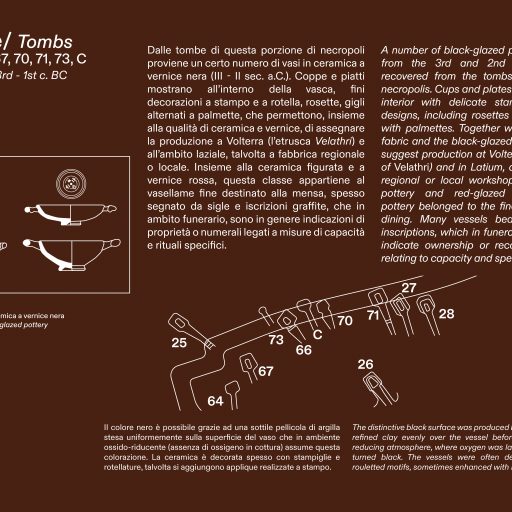
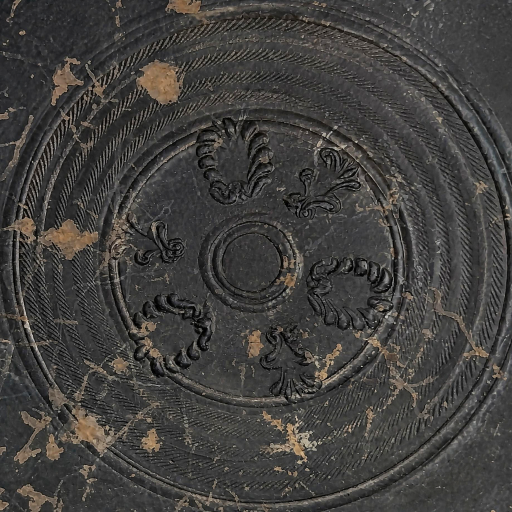
Dalle tombe di questa porzione di necropoli proviene un certo numero di vasi in ceramica a vernice nera (III-II sec. a.C.). Coppe e piatti mostrano all’interno della vasca, fini decorazioni a stampo e a rotella, rosette, gigli alternati a palmette, che permettono, insieme alla qualità di ceramica e vernice, di assegnare la produzione a Volterra (l’etrusca Velathri) e all’ambito laziale, talvolta a fabbrica regionale o locale. Insieme alla ceramica figurata e a vernice rossa, questa classe appartiene al vasellame fine destinato alla mensa, spesso segnato da sigle e iscrizioni graffite, che in ambito funerario, sono in genere indicazioni di proprietà o numerali legati a misure di capacità e rituali specifici.
Il colore nero è possibile grazie ad una sottile pellicola di argilla stesa uniformemente sulla superficie del vaso che in ambiente ossido-riducente (assenza di ossigeno in cottura) assume questa colorazione. La ceramica è decorata spesso con stapiglie e rotellature, talvolta si aggiungono applique realizzate a stampo.
Immagini:
- La necropoli del Palazzone: pannello nell’area archeologica.
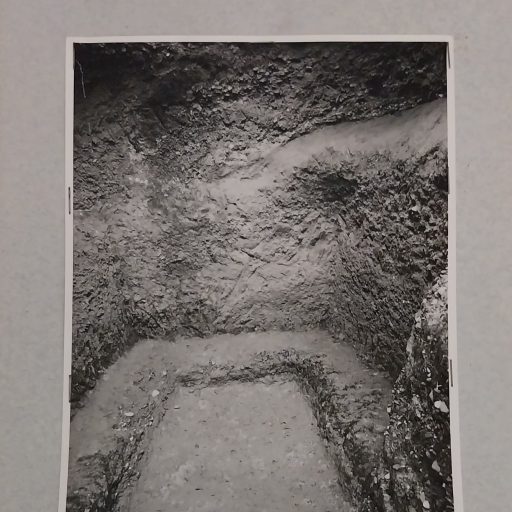
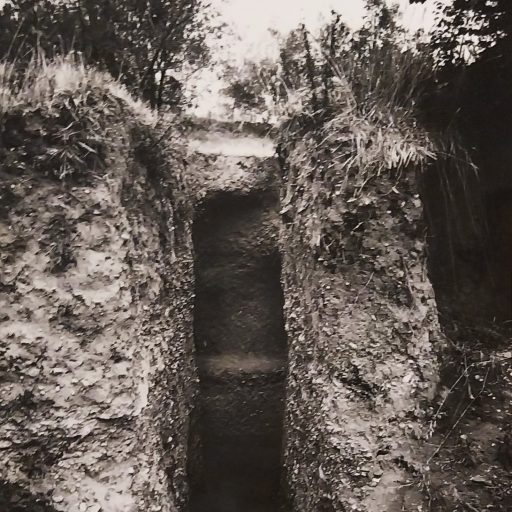
- – 3 Le tombe 26, 28 in corso di scavo (novembre-dicembre 1965)
- Stampiglie e rotelature su piatto a vernice nera dalla necropoli del Palazzone
Tombs 26-28, 64, 66, 67, 70, 71, 73, C
3rd – 1st century BC
A number of black-glazed pottery vessels dating from the 3rd and 2nd centuries BC were recovered from the tombs in this part of the necropolis. Cups and plates are decorated on the interior with delicate stamped and rouletted designs, including rosettes and lilies alternating with palmettes. Together with the quality of the fabric and the black-glazed finish, these features suggest production at Volterra (the Etruscan city of Velathri) and in Latium, and in some cases in regional or local workshops. Alongside figured pottery and red-glazed ware, black-glazed pottery belonged to the fine tableware used for dining. Many vessels bear incised initials or inscriptions, which in funerary contexts generally indicate ownership or record numerical marks relating to capacity and specific ritual practices.
The distinctive black surface was produced by applying a thin coating of refined clay evenly over the vessel before firing. During firing in a reducing atmosphere, where oxygen was largely excluded, this coating turned black. The vessels were often decorated with stamped or rouletted motifs, sometimes enhanced with mould-made appliqués.
Images:
- The Palazzone Necropolis: panel in the archaeological area.
- -3. Tombs 26, 28 during excavation (November-December 1965)
- Stamped and rouletted designs on black-glazed plate from the Palazzone Necropolis
Galleria fotografica (scorri)
14 October 2026
1. La necropoli del Palazzone: pannello nell’area archeologica.
14 October 2026
2-3. Le tombe 26, 28 in corso di scavo (novembre-dicembre 1965)
14 October 2026
2-3. Le tombe 26, 28 in corso di scavo (novembre-dicembre 1965)
14 October 2026
3. Stampiglie e rotelature su piatto a vernice nera dalla necropoli del Palazzone
Ultimo aggiornamento
23 Ottobre 2026, 09:31