 Musei nazionali di Perugia – Direzione regionale Musei nazionali Umbria
La necropoli ellenistica / The Hellenistic Necropolis
La necropoli ellenistica
Fine IV – I sec. a.C.
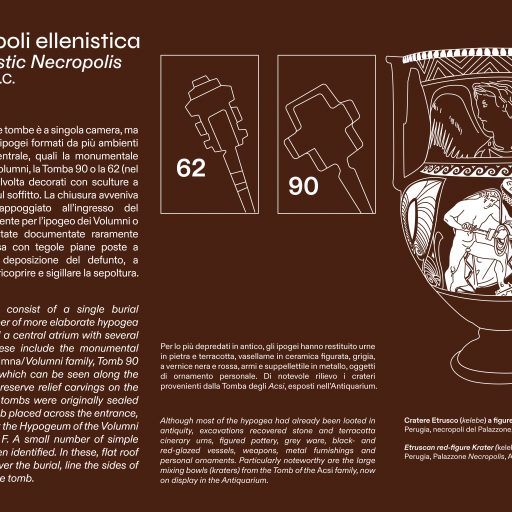
La maggior parte delle tombe è a singola camera, ma si distinguono alcuni ipogei formati da più ambienti aperti su un atrio centrale, quali la monumentale tomba dei Velimna/Volumni, la tomba 90 o la 62 (nel percorso di visita), talvolta decorati con sculture a rilievo sulle pareti o sul soffitto. La chiusura avveniva con un lastrone appoggiato all’ingresso del sepolcro, ancora presente per l’ipogeo dei Volumni o la tomba F. Sono state documentate raramente anche tombe a fossa con tegole piane poste a coprire il piano di deposizione del defunto, a foderare le pareti e a ricoprire e sigillare la sepoltura.
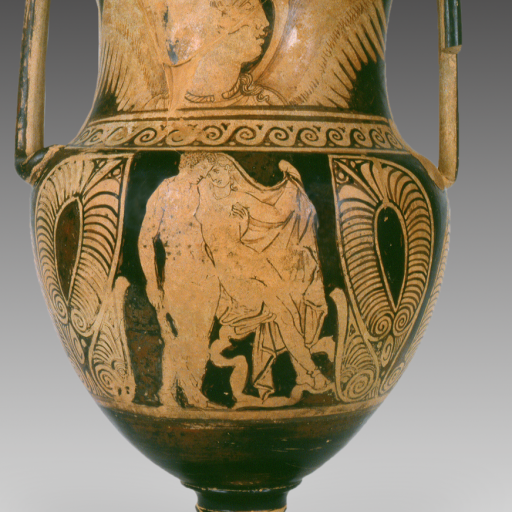
Per lo più depredati in antico, gli ipogei hanno restituito urne in pietra e terracotta, vasellame in ceramica figurata, a vernice nera, rossa e grigia, armi e suppellettile in metallo, oggetti di ornamento personale. Di notevole rilievo i crateri provenienti dalla tomba degli Acsi, esposti nell’Antiquarium.
Immagini:
- La necropoli del Palazzone: pannello nell’area archeologica.
- Kelebe (cratere a colonnette) esposta all’Antiquarium.
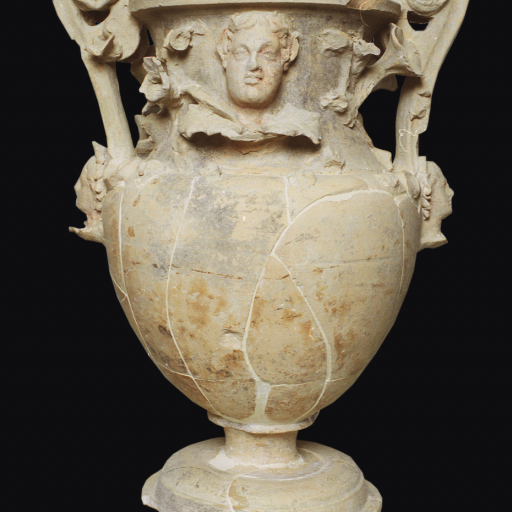
- Cratere plastico esposto all’Antiquarium.
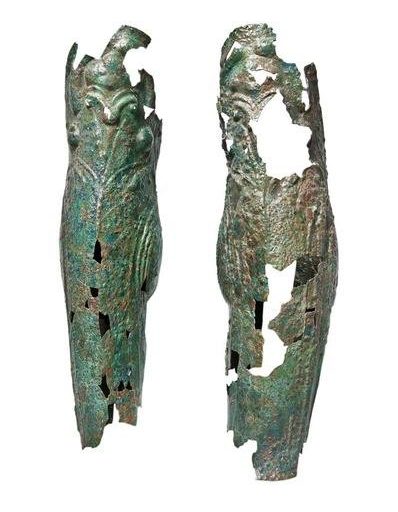
- Schinieri (esposti al Museo archeologico nazionale dell’Umbria).
The Hellenistic Necropolis
Late 4th – 1st century BC
Most of the tombs consist of a single burial chamber, but a number of more elaborate hypogea are arranged around a central atrium with several adjoining rooms. These include the monumental Hypogeum of the Velimna/Volumni family, Tomb 90 and Tomb 62, all of which can be seen along the visitor route. Some preserve relief carvings on the walls or ceiling. The tombs were originally sealed with a large stone slab placed across the entrance, as can still be seen at the Hypogeum of the Volumni family and at Tomb F. A small number of simple graves have also been identified. In these, flat roof tiles were used to cover the burial, line the sides of the grave and seal the tomb.
Although most of the hypogea had already been looted in antiquity, excavations recovered stone and terracotta cinerary urns, figured pottery, grey ware, black- and red-glazed vessels, weapons, metal furnishings and personal ornaments. Particularly noteworthy are the large mixing bowls (kraters) from the Tomb of the Acsi family, now on display in the Antiquarium.
Images:
- The Palazzone Necropolis: panel of the archaeological area.
- Kelebe (column-krater) on display at the Antiquarium.
- Plastic Krater, on display at the Antiquarium.
- Greaves (on display at the Museo archeologico nazionale dell’Umbria).
Galleria fotografica (scorri)
14 October 2026
1. La necropoli del Palazzone: pannello nell’area archeologica
14 October 2026
2. Kelebe (cratere a colonnette) esposta all’Antiquarium.
14 October 2026
3. Cratere plastico esposto all’Antiquarium.
14 October 2026
4. Schinieri (esposti al Museo archeologico nazionale dell’Umbria).
Ultimo aggiornamento
23 Ottobre 2026, 09:28