 Musei nazionali di Perugia – Direzione regionale Musei nazionali Umbria
Toeletta femminile/Women’s grooming and body care
Toeletta femminile
Beauty-case etruschi
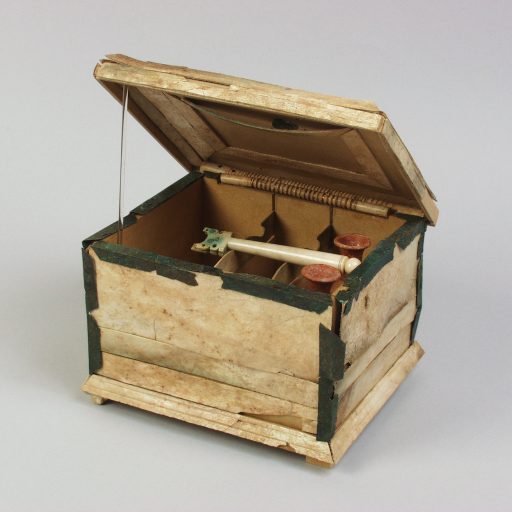
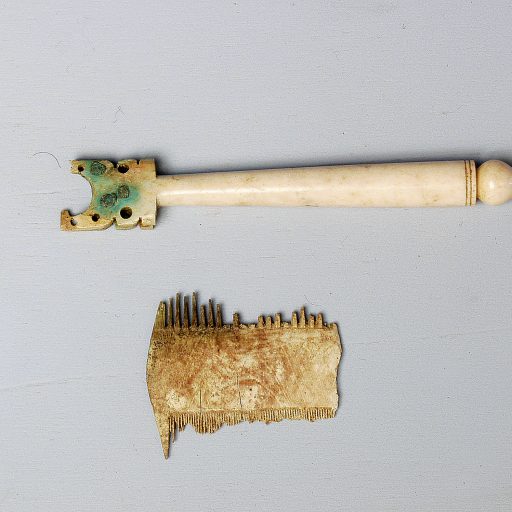
Il cofanetto esposto (I sec. a.C.), in origine in legno ricoperto di sottili lamine d’osso, ricostruito sulla base della lunghezza degli elementi di rivestimento, è stato rinvenuto in località Casaglia, all’interno di una tomba sconvolta a seguito di scavi clandestini, che ha restituito solo urne femminili. Era parte del corredo di una delle deposizioni, forse appartenuto a Thania Veltsnei, che è raffigurata sulla cassa dell’urna nell’atto di stringere la mano al consorte, un gesto che può simboleggiare il matrimonio ma anche l’ultimo addio. La figura femminile dietro la defunta, forse un’ancella, trattiene un contenitore simile al cofanetto rinvenuto. L’esemplare reale, chiuso da un coperchio forse a doppia cerniera, era probabilmente suddiviso all’interno in più scomparti e conteneva balsamari in terracotta per profumi, un pettine e un manico di flabello (ventaglio) in osso cui dovevano essere fissate, mediante chiodini bronzei, piume variopinte. Nella tomba erano anche uno specchio rettangolare in bronzo e una tavoletta in arenaria per stemperare il trucco. A Thana Ancari, moglie di un Satna (II-I sec. a.C.) appartengono balsamari in terracotta, uno specchio circolare in bronzo e un cofanetto, indiziato da sottili cornici sagomate e da una serie di anellini in osso che dovevano rivestire una cassetta in legno e costituirne la cerniera. L’apertura-chiusura del recipiente era possibile grazie agli anelli fissati alternativamente a cassa e coperchio e a un perno che attraversava le due serie. I Setume possedevano invece un cofanetto ligneo, realizzato ad intarsio (fine IV-III sec. a.C.), di cui abbiamo elementi in osso lavorato e di cui si propone una ricostruzione grafica in base a confronti noti. La cura del corpo da parte di uomini e donne etruschi e la bellezza femminile erano note alle fonti greche e latine e oggetti reali e raffigurazioni confermano il ruolo di primo piano della donna che, truccata, ingioiellata, profumata, elegantemente vestita, prende posto, a fianco dello sposo, nei momenti salienti della vita pubblica, negli stadi, ai concerti, agli spettacoli, sui letti conviviali.
Immagini:
Tomba cosiddetta “del Bacio”, loc. Casaglia (II-I sec. a.C.).
- Cofanetto in legno rivestito in osso con elementi in bronzo (ricostruzione ipotetica): all’interno unguentari in ceramica depurata e manico di flabello (ventaglio) in osso.
- Pettine e manico di flabello in osso.
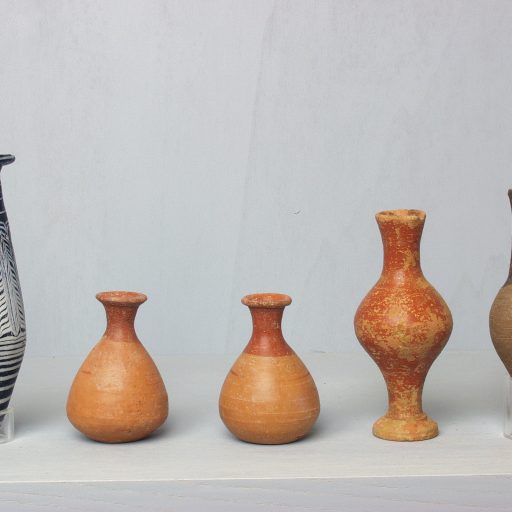
- Unguentari in ceramica e vetro.
Scavi ottocenteschi (III-II sec. a.C.).
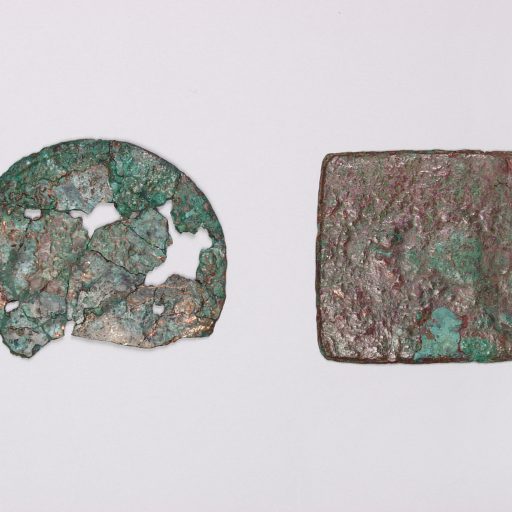
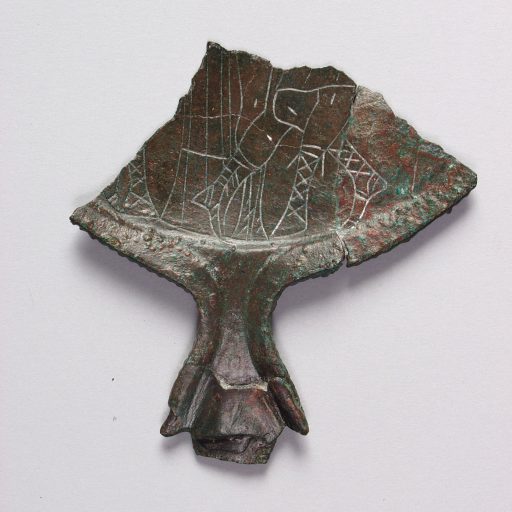
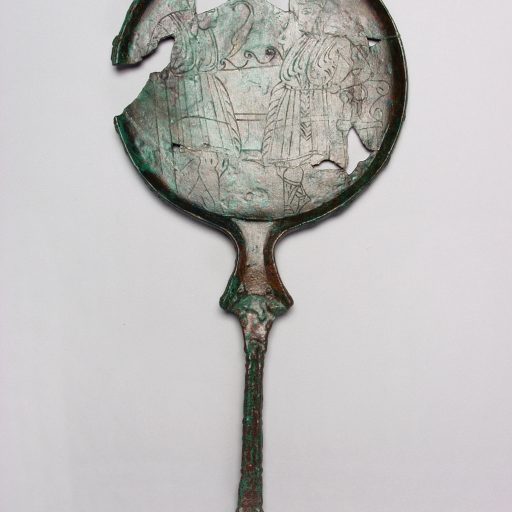
4-6. Specchi in bronzo.
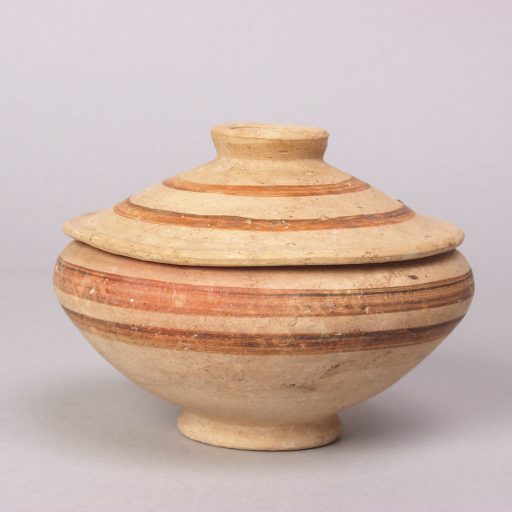
- Pisside (contenitore con coperchio) in ceramica dipinta a fasce.
Women’s grooming and body care
Etruscan Cosmetic sets
The casket on display (1st century BC) was originally made of wood covered with thin bone plaques. It has been reconstructed on the basis of the length of the surviving elements of covering. It was found at Casaglia, inside a tomb disturbed by clandestine excavations, which yielded only female urns. The casket was part of the grave goods of one of the burials and may have belonged to Thania Veltsnei, who is depicted on the chest of her urn clasping hands with her husband – a gesture that may symbolise marriage, but also a final farewell. The female figure standing behind the deceased, possibly a handmaid, holds a container similar to the casket found in the tomb. The actual object, sealed by a lid that perhaps could have been fitted with a double hinge, was probably divided inside into several compartments. It contained terracotta perfume bottles, a comb and a bone handle of a flabellum (fan) to which brightly coloured feathers would have been attached with small bronze nails. Other artefacts discovered inside the tomb included a rectangular bronze mirror and a sandstone palette for mixing cosmetics. Thana Ancari, wife of a member of the Satna family (2nd-1st centuries BC), was buried with terracotta perfume vessels, a circular bronze mirror and a casket, identified by its thin moulded frames and a series of small bone rings which would have covered a wooden box and formed its hinge. The box could be opened and closed by means of rings fixed alternately to the box and the lid, and a pin passing through the rings. The Setume family owned a wooden casket with inlaid decoration (late 4th-3rd centuries BC) of which only worked bone elements survive, and of which a graphic reconstruction has been created on the basis of known parallels.The care taken by Etruscan men and women over their appearance and the importance attached to female beauty were noted by Greek and Roman authors. Actual objects and representations confirm the prominent role of women, who, with make-up carefully applied, adorned with jewellery, perfumed and elegantly dressed, took their place alongside their husbands in key moments of public life: in stadiums, at concerts and shows, and on the dining couches at banquets.
Images:
The so-called “Tomb of the Kiss,” Casaglia (2nd-1st centuries BC).
- Wooden box covered in bone with bronze elements (hypothetical reconstruction): inside, perfume vases made of refined ceramic and a bone handle from a flabellum (fan).
- Bone handle from a flabellum (fan) and comb.
- Ceramic and glass ointment jars.
19th-century excavations (3rd-2nd centuries BC).
4-6. Bronze mirrors.
- Ceramic pyxis (container with a lid) decorated with bands.
Galleria fotografica (scorri)
22 October 2026
1. Cofanetto in legno rivestito in osso con elementi in bronzo (ricostruzione ipotetica): all’interno unguentari in ceramica depurata e manico di flabello (ventaglio) in osso.
22 October 2026
2. Pettine e manico di flabello in osso.
22 October 2026
3. Unguentari in ceramica e vetro. Scavi ottocenteschi (III-II sec. a.C.).
22 October 2026
4-6. Specchi in bronzo.
22 October 2026
22 October 2026
4-6. Specchi in bronzo.
22 October 2026
7. Pisside (contenitore con coperchio) in ceramica dipinta a fasce.
Ultimo aggiornamento
23 Ottobre 2026, 09:42